Written by
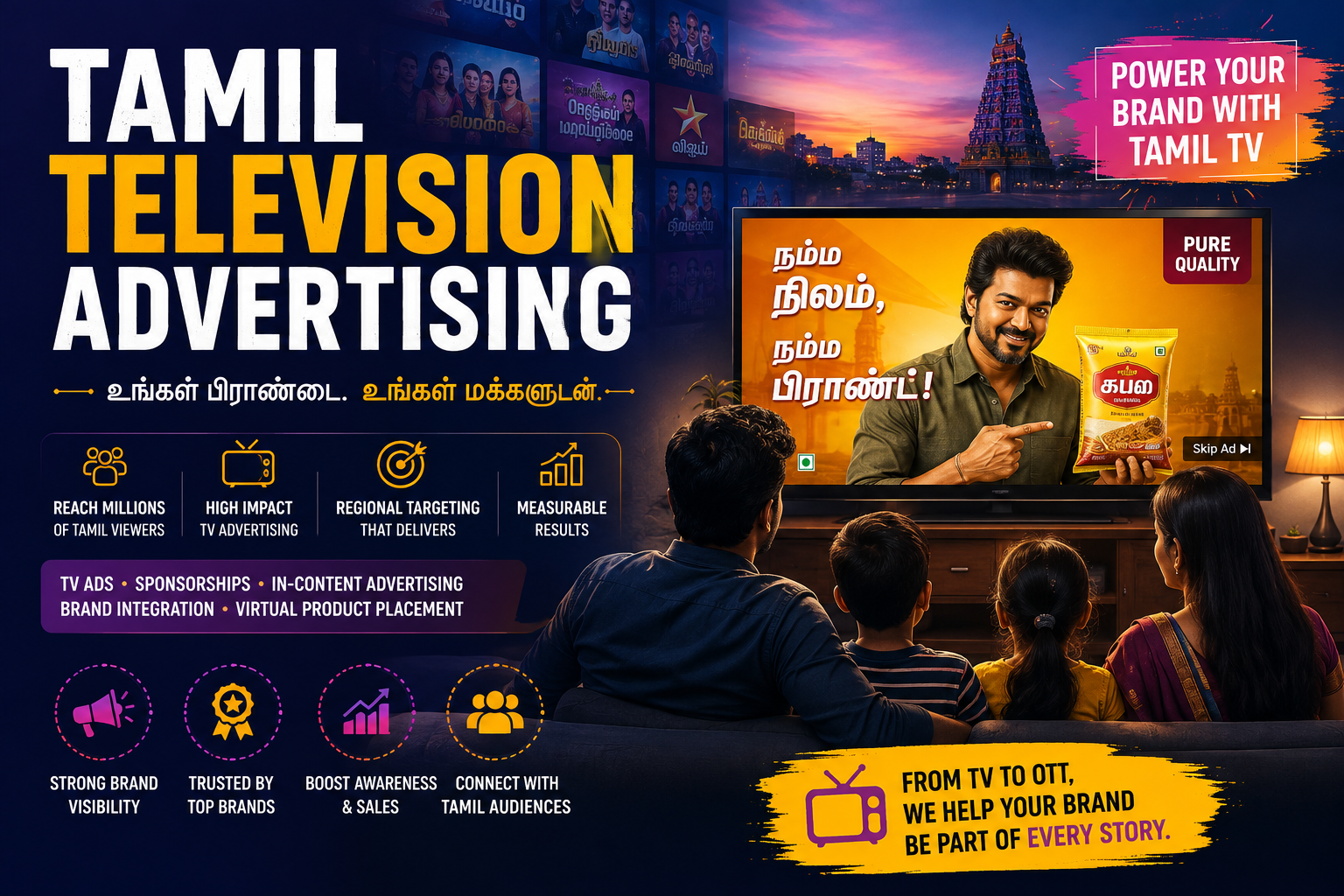
 Tamil television advertising continues to play an important role in reaching audiences across Tamil Nadu. From entertainment shows and news programs to movies and live events, Tamil-language television provides brands with opportunities to connect with viewers through familiar content and regional storytelling.
While digital media and streaming platforms are growing quickly, television remains valuable for advertisers seeking broad regional awareness and repeated brand exposure.
Why Tamil Television Advertising Matters
Tamil Nadu has a strong regional media ecosystem, with audiences consuming television content in their preferred language. According to recent industry analysis, Tamil Nadu accounted for an estimated ₹2,900–₹3,100 crore in TV advertising expenditure in 2024, making it one of the leading television advertising markets in South India. Regional channels also grew by around 9–12% during the year.
This makes Tamil television particularly relevant for brands targeting consumers across Tamil Nadu.
Language is also an important part of advertising effectiveness. A campaign developed around local culture, language, and viewing habits can feel more relevant than a generic national advertisement.
Popular Formats for Tamil TV Advertising
Brands can use several formats depending on their campaign objective:
- TV commercials: Short advertisements during commercial breaks.
- Prime-time advertising: Placements around high-viewership programs.
- Program sponsorships: Brand association with specific shows or events.
- Branded content: Promotional messages built around the program experience.
- In-content advertising: Products or brands integrated directly into entertainment.
- Virtual product placement: Digital insertion of products into existing video content.
Each format serves a different purpose. Traditional commercials can deliver broad awareness, while integrated formats can connect the brand more closely with the content.
The Shift Toward In-Content Advertising
The television advertising model is gradually expanding beyond commercial breaks. In-content advertising allows brands to become part of movies, television shows, music videos, and streaming content.
For example, a product could appear naturally in a scene instead of being shown during an advertising break. This can create a closer relationship between the product, storyline, and viewing environment.
Research also shows that product placement attracts audience attention. A 2026 YouGov study found that 45% of U.S. adults say they always or often notice brands or products appearing in movies, TV shows, or streaming content.
For advertisers, this creates opportunities to explore brand visibility through storytelling rather than interruption.
AI Is Changing Television Advertising
Artificial intelligence is creating new possibilities for contextual advertising, virtual product placement, creative production, and campaign optimization.
AI-powered systems can analyze video scenes, objects, environments, and other contextual signals to identify suitable opportunities for advertising integration. This can help advertisers understand where a brand could appear naturally within content.
Artcube focuses on AI-powered advertising and visual content solutions that support modern brand integration across entertainment and digital media.
AI can also help businesses develop multiple creative variations and adapt advertising assets for different platforms. This becomes increasingly useful as campaigns move between traditional television, OTT platforms, connected TV, and digital video.
Tamil TV and the Rise of OTT
Television advertising is no longer limited to linear broadcasting. Viewers increasingly move between television channels, connected TVs, and streaming services.
India’s expanding streaming audience creates additional opportunities for regional campaigns. Advertisers can combine Tamil television with OTT and digital video to build broader reach while maintaining language and cultural relevance.
This combination can also support more flexible advertising strategies, where traditional TV delivers scale and digital platforms provide additional targeting and measurement capabilities.
Building a Strong Tamil Advertising Strategy
An effective campaign should begin with the target audience, campaign objective, content environment, and preferred language. Brands should then select the appropriate mix of TV commercials, sponsorships, branded content, or in-content placements.
Technology can make this process more efficient. Artcube’s technology demonstrates how AI can support modern advertising workflows and content-based brand integration.
Conclusion
Tamil television advertising remains an important channel for brands seeking regional reach and strong audience familiarity. At the same time, the growth of OTT, connected TV, AI, and in-content advertising is creating new ways to integrate brands into entertainment.
The future of Tamil advertising will likely combine the reach of television with the flexibility of digital technology, allowing brands to build more relevant and engaging connections with Tamil-speaking audiences.