Written by
 Introduction
Navratri is a time of devotion, celebration, and special food traditions. During the nine-day festival, many people change their regular diet and prepare meals using ingredients that are permitted during their vrat.
The food choices can be quite different from everyday Indian cooking. Ingredients such as sabudana, makhana, potatoes, sweet potatoes, fruits, nuts, dairy, kuttu flour, singhara flour, and rajgira are commonly used in different fasting traditions. Current fasting guides also highlight foods such as sabudana, buckwheat flour, water chestnut flour, amaranth, makhana, potatoes, fruits, dairy and dry fruits as common vrat ingredients.
However, there is no single fasting menu followed by everyone. Rules can vary by region, community, and family.
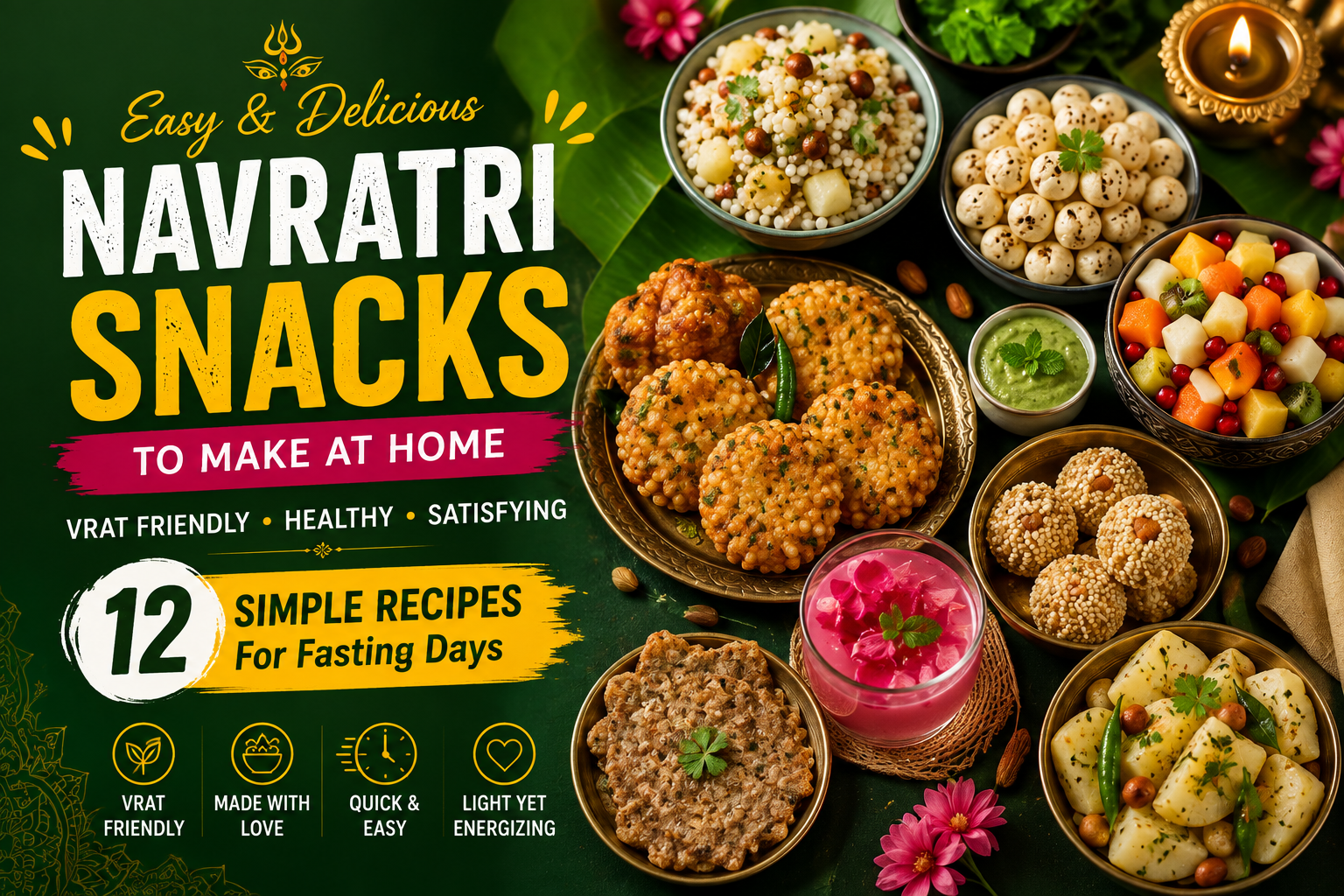
If you are planning your Navratri menu, these 12 Navratri snacks can give you plenty of ideas while keeping preparation simple.
1. Sabudana Khichdi
Sabudana khichdi is one of the best-known fasting dishes in India.
Soaked tapioca pearls are cooked with roasted peanuts, cumin, green chilli, potatoes, and sendha namak. A little lemon juice can add freshness to the finished dish.
The texture is the key to good sabudana khichdi. The pearls should be soft but separate rather than sticky.
It can work as a breakfast, lunch, or evening snack during vrat, depending on your family’s fasting routine.
2. Roasted Makhana
Makhana, or fox nuts, is an easy snack when you want something crunchy without spending much time in the kitchen.
Simply roast makhana in a pan with a little ghee and season it according to your fasting rules. Rock salt, cumin, black pepper, or other permitted seasonings can be used.
Makhana can also be prepared in advance and stored in an airtight container.
It is especially useful as a quick snack between meals.
3. Aloo Chaat
Potatoes are widely used in many Navratri fasting traditions, making aloo chaat a simple option for snack time.
Boiled potatoes can be cut into cubes and combined with roasted cumin, lemon juice, coriander, and sendha namak.
For a more filling version, add roasted peanuts if they are part of your fasting tradition.
Keep the preparation fresh and serve it soon after mixing the ingredients.
4. Sweet Potato Chaat
Sweet potatoes bring a naturally sweet flavour to a simple fasting snack.
Boil or roast the sweet potato until tender, then cut it into bite-sized pieces. Add lemon juice, roasted cumin powder, coriander, and permitted salt.
You can also add a small amount of grated coconut or peanuts depending on your family’s vrat rules.
This snack is especially convenient because the sweet potato can be cooked ahead of time.
5. Sabudana Vada
If you enjoy crispy snacks, sabudana vada can be a good addition to a Navratri menu.
Soaked sabudana is combined with mashed potato, roasted peanuts, cumin, herbs, and permitted seasoning. The mixture is shaped into small patties and cooked until crisp.
For a lighter preparation, the vadas can be shallow-fried or air-fried instead of deep-fried.
Serve them fresh with a suitable fasting-friendly dip.
6. Kuttu Cheela
Kuttu, or buckwheat flour, is commonly used as an alternative to regular flour during many fasting traditions.
Kuttu cheela is prepared by mixing the flour with suitable ingredients and water to create a batter. It can then be cooked on a hot pan with a little ghee or oil.
Add potatoes, herbs, or other permitted vegetables for extra flavour.
The result is a simple savoury snack that can also work as a light meal.
7. Rajgira Ladoo
Rajgira, also known as amaranth, is another ingredient commonly used in fasting foods.
Rajgira ladoos can be made by combining popped amaranth with jaggery and shaping the mixture into small balls.
These ladoos are convenient to carry and can be prepared ahead of time.
If you enjoy traditional Indian festive sweets beyond vrat-specific recipes, you can also explore SGR 777’s collection of Indian sweets and snacks for additional festive inspiration.
8. Makhana Chaat
Makhana does not have to be served only as a roasted snack.
For a fresh variation, combine roasted makhana with boiled potato, cucumber, coriander, lemon juice, and permitted spices.
This creates a crunchy and refreshing snack with several different textures.
Prepare the chaat just before eating so that the makhana remains crisp.
9. Fruit Chaat
Fruit chaat is one of the easiest Navratri snack ideas because it requires little cooking.
Use fruits such as apple, banana, papaya, pomegranate, orange, or seasonal fruits that fit your family’s fasting rules.
Cut the fruit into small pieces and add lemon juice with suitable seasoning.
Avoid adding ingredients that are not allowed during your particular vrat.
A simple fruit bowl can also be a useful option when you want something light between meals.
10. Singhara Flour Pancakes
Singhara, or water chestnut flour, is commonly used in fasting recipes.
It can be turned into a simple pancake or cheela by mixing the flour with water and permitted ingredients.
Add mashed potato, cumin, coriander, or green chilli according to your family’s fasting preferences.
Cook the pancake on a lightly greased pan until both sides are properly done.
Serve immediately while warm.
11. Peanut and Coconut Bites
Peanuts and coconut can be combined to create a simple homemade snack.
Roasted peanuts can be crushed and mixed with grated coconut and a small amount of jaggery. Shape the mixture into small bites or ladoos.
This requires very little cooking and can be prepared in a small batch.
Keep the sweetness moderate if you are already including other sweet dishes in your Navratri menu.
12. Fruit and Makhana Bowl
For a no-fuss snack, combine chopped permitted fruits with roasted makhana and a few nuts.
This option requires almost no cooking and can be prepared within minutes.
The soft fruit and crunchy makhana create an enjoyable contrast, while nuts can add another layer of texture.
It is also easy to adjust the quantity depending on whether you want a small snack or a more filling bowl.
How to Choose the Right Navratri Snacks
The best fasting snack depends on what your family traditionally allows.
Some people follow strict vrat rules, while others follow a more flexible fasting menu. Before preparing a recipe, check whether its ingredients are permitted in your tradition.
Common fasting ingredients can include:
- Sabudana
- Makhana
- Potatoes
- Sweet potatoes
- Kuttu flour
- Singhara flour
- Rajgira
- Fruits
- Milk and dairy products
- Peanuts and selected nuts
- Sendha namak
Regular grains and cereals are avoided in many Navratri fasting traditions, but practices differ.
Make Your Vrat Menu More Interesting
Eating the same snack every day can quickly become boring.
Instead, rotate different textures and flavours throughout the festival.
For example, you could have sabudana khichdi one day, roasted makhana the next, followed by sweet potato chaat, kuttu cheela, fruit chaat, and rajgira ladoos.
This simple rotation gives your menu more variety without requiring complicated recipes.
You can also balance sweet and savoury options. After a savoury snack such as sabudana vada, a small serving of a traditional sweet can make the meal feel more festive.
For more inspiration around traditional festive sweets, explore these Indian sweets and festive treats.
Easy Drinks to Pair With Navratri Snacks
Drinks can also make fasting days more enjoyable.
Water should remain a regular part of your day unless your specific fasting practice restricts it. Depending on your tradition, milk, buttermilk, fresh fruit drinks, or other permitted beverages may also be suitable.
For a festive non-alcoholic drink option, SGR 777’s rose sharbat can provide a floral and refreshing choice when its ingredients fit your fasting practice.
Always check the product ingredients and your family’s vrat rules before including a packaged beverage during fasting.
Tips for Preparing Navratri Snacks at Home
Keep Ingredients Ready
Before Navratri begins, organize commonly used ingredients such as sabudana, makhana, potatoes, nuts, fasting flours, fruits, and permitted seasonings.
Prepare Small Portions
You do not need to cook large quantities. Smaller portions can be easier to keep fresh and reduce unnecessary food waste.
Watch the Texture
For dishes such as sabudana khichdi and sabudana vada, soaking and preparation technique can make a major difference.
Use Fresh Ingredients
Fresh fruits, dairy products, herbs, and vegetables can improve both taste and presentation.
Follow Your Family’s Vrat Rules
This is the most important point. Navratri fasting practices are not identical everywhere. An ingredient permitted in one household may not be used in another.
A Simple 3-Day Navratri Snack Rotation
If you want an easy way to plan your snacks, try a simple rotation.
Day 1: Roasted makhana + fruit bowl
Day 2: Sabudana khichdi + sweet potato chaat
Day 3: Kuttu cheela + rajgira ladoo
You can repeat the pattern with different combinations during the remaining days.
This makes planning easier while giving you enough variety to avoid eating the same snack every day.
Why Homemade Snacks Work Well During Navratri
Preparing snacks at home gives you more control over the ingredients and seasoning.
You can choose the amount of ghee, oil, salt, spices, nuts, and sweeteners according to your preferences and fasting practices.
It also allows you to prepare food fresh rather than depending entirely on ready-made snacks.
For families celebrating together, cooking can become part of the festive experience itself. Children can help wash fruit, arrange ingredients, or prepare simple no-cook snacks while adults handle the cooking.
Conclusion
Navratri fasting does not have to mean eating the same food every day. With ingredients such as sabudana, makhana, potatoes, sweet potatoes, kuttu, singhara, rajgira, fruits, and nuts, you can create a varied selection of homemade snacks.
From crispy sabudana vada and kuttu cheela to refreshing fruit chaat and roasted makhana, these Navratri snacks can make your fasting menu more enjoyable and interesting.
Remember that fasting traditions differ between families and regions. Always check the ingredients and follow the rules that apply to your own vrat.
With a little preparation and a simple menu plan, you can enjoy Navratri with food that is practical, festive, and suited to your family’s traditions.