Written by
 Most NDIS cleaning visits cover everyday tasks like vacuuming, bathrooms, and kitchens, but some situations call for a different level of skill or equipment altogether. Knowing when standard NDIS cleaning support is enough, and when a specialist service is genuinely needed, helps participants avoid both underestimating a job and paying for expertise that isn’t required. Westlink Cleaning Services works with participants across Sydney who are often unsure exactly where that line sits.
What Counts as Standard NDIS Cleaning Support
The Usual Scope of a Regular Visit
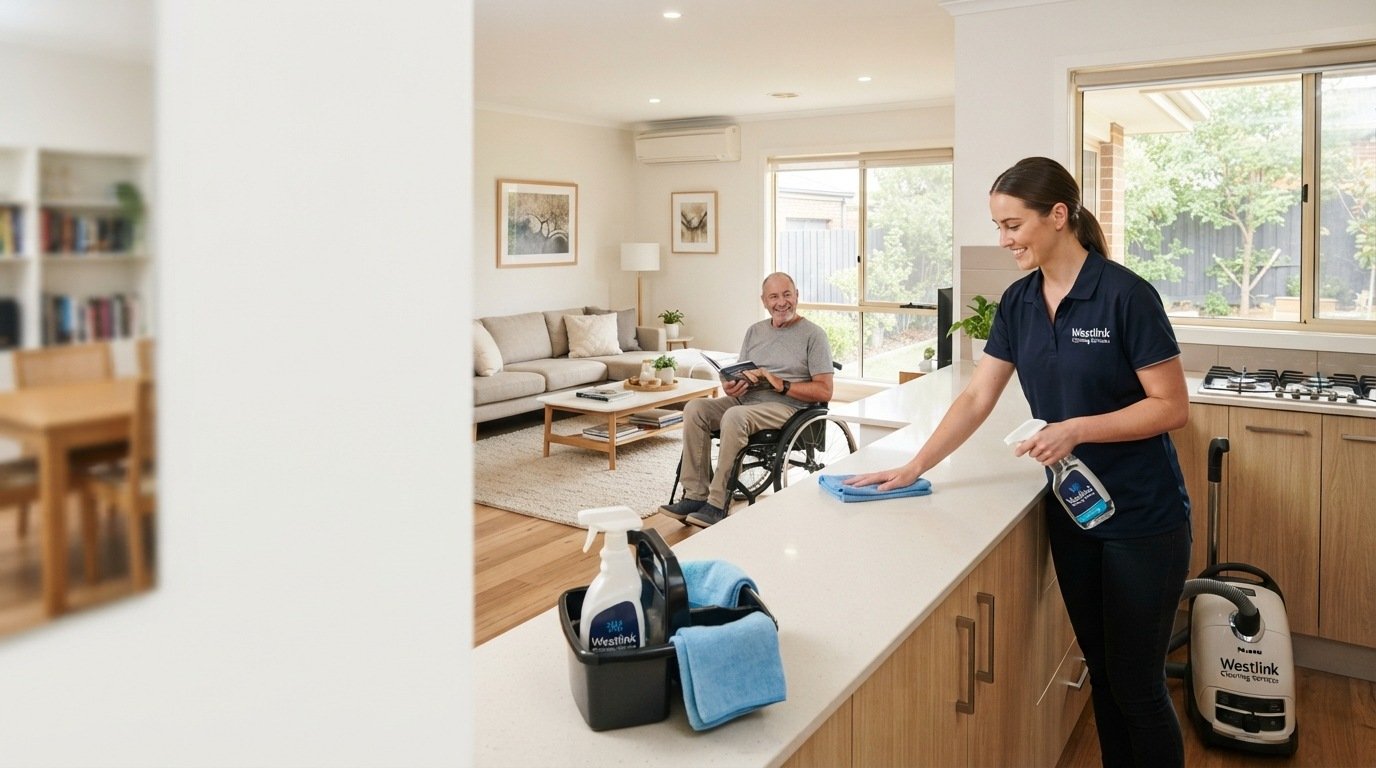
Standard NDIS cleaning support generally covers routine household tasks such as vacuuming, mopping, dusting, bathroom and kitchen cleaning, and general tidying. These are the tasks most participants need on a recurring basis, and they’re typically what’s funded as part of everyday Core Supports.
Why This Baseline Matters
Understanding this baseline is useful because it sets a reference point. Anything that falls clearly outside routine, recurring household cleaning is worth questioning as a possible specialist task rather than assuming a regular cleaner will simply handle it during a normal visit.
Situations Where NDIS Cleaning Needs a Specialist
Heavy Mould, Mildew, or Biohazard Situations
A small amount of bathroom mould is often manageable during a standard visit, but extensive mould growth, water damage, or biohazard situations usually require specialised treatment and equipment. Attempting to manage this kind of job with regular cleaning products can be ineffective and, in some cases, unsafe.
Pest-Related Cleaning
If a home has an active pest issue, whether rodents, cockroaches, or something more serious, cleaning alone won’t resolve the underlying problem. A pest control specialist typically needs to treat the issue first, after which regular cleaning support can resume as normal.
Deep Carpet or Upholstery Restoration
Light vacuuming is part of standard cleaning, but deep stains, odour removal, or full carpet steam cleaning often call for specialised equipment a regular cleaner won’t carry. This is particularly relevant for participants with allergies or respiratory sensitivities who need carpets thoroughly treated rather than just surface-cleaned.
Post-Renovation or Post-Trauma Cleaning
Homes recovering from renovation work, a significant medical event, or a traumatic incident sometimes need a specialised clean before regular support can safely resume. Builders’ dust, debris, or biohazard material generally sits outside what a standard NDIS cleaning visit is equipped to handle.
High-Access or Structural Cleaning
Tasks requiring scaffolding, external ladders, or access to roof cavities and gutters typically fall outside standard cleaning support and require a specialist with the right equipment and safety training.
How to Tell Whether a Job Needs a Specialist
Signs the Situation Has Moved Beyond Routine Cleaning
A few signs suggest a job has moved beyond what regular NDIS cleaning support can safely manage. Persistent odours that don’t clear with normal cleaning, visible mould spreading across multiple rooms, ongoing pest activity, or debris left over from construction work are all reasonable indicators that specialised help is needed first.
Asking a Cleaning Company for Guidance
A reputable cleaning company will usually be upfront if a job sits outside their scope, rather than attempting a task they aren’t equipped for. Asking directly during an initial enquiry or first visit is a straightforward way to confirm whether a specific issue needs a specialist referral.
How Specialist Cleaning Fits Into an NDIS Plan
Funding Considerations
Specialist cleaning isn’t always funded the same way as standard household tasks, and in some cases it may sit outside NDIS funding altogether, particularly where insurance or other supports are more appropriate, such as after flood or fire damage. Checking with a support coordinator before booking specialist work helps confirm whether it fits within existing plan funding or needs to be arranged separately.
Returning to Regular Support Afterwards
Once a specialist has addressed the underlying issue, whether that’s mould remediation, pest treatment, or post-renovation debris removal, regular NDIS cleaning support can typically resume as normal, keeping the home at a manageable standard going forward.
Frequently Asked Questions
Does NDIS funding cover specialist cleaning like mould remediation?
It depends on the situation and how the task relates to a participant’s disability-related needs. Some specialist work may need separate funding or falls outside standard NDIS cleaning support entirely.
Can my regular cleaner handle a small amount of mould?
Light surface mould in a bathroom is often manageable during a standard visit, but extensive or recurring mould usually needs specialised treatment.
Who arranges a specialist if my regular cleaning company can’t handle a job?
A good cleaning company will usually flag this during an enquiry or visit and can often point toward an appropriate specialist, though a support coordinator can also help confirm funding options.
Will my usual cleaning service resume once a specialist has finished?
Yes, in most cases regular NDIS cleaning support picks back up once the underlying issue has been professionally addressed.
Get the Right Cleaning Support for Your Situation in Sydney
Knowing the difference between everyday cleaning needs and situations that call for specialist help makes it easier to get the right support at the right time. Westlink Cleaning Services can assess a home’s situation and advise honestly on whether standard cleaning support is sufficient or a specialist referral makes more sense. Reach out to discuss your specific circumstances.