
 Written by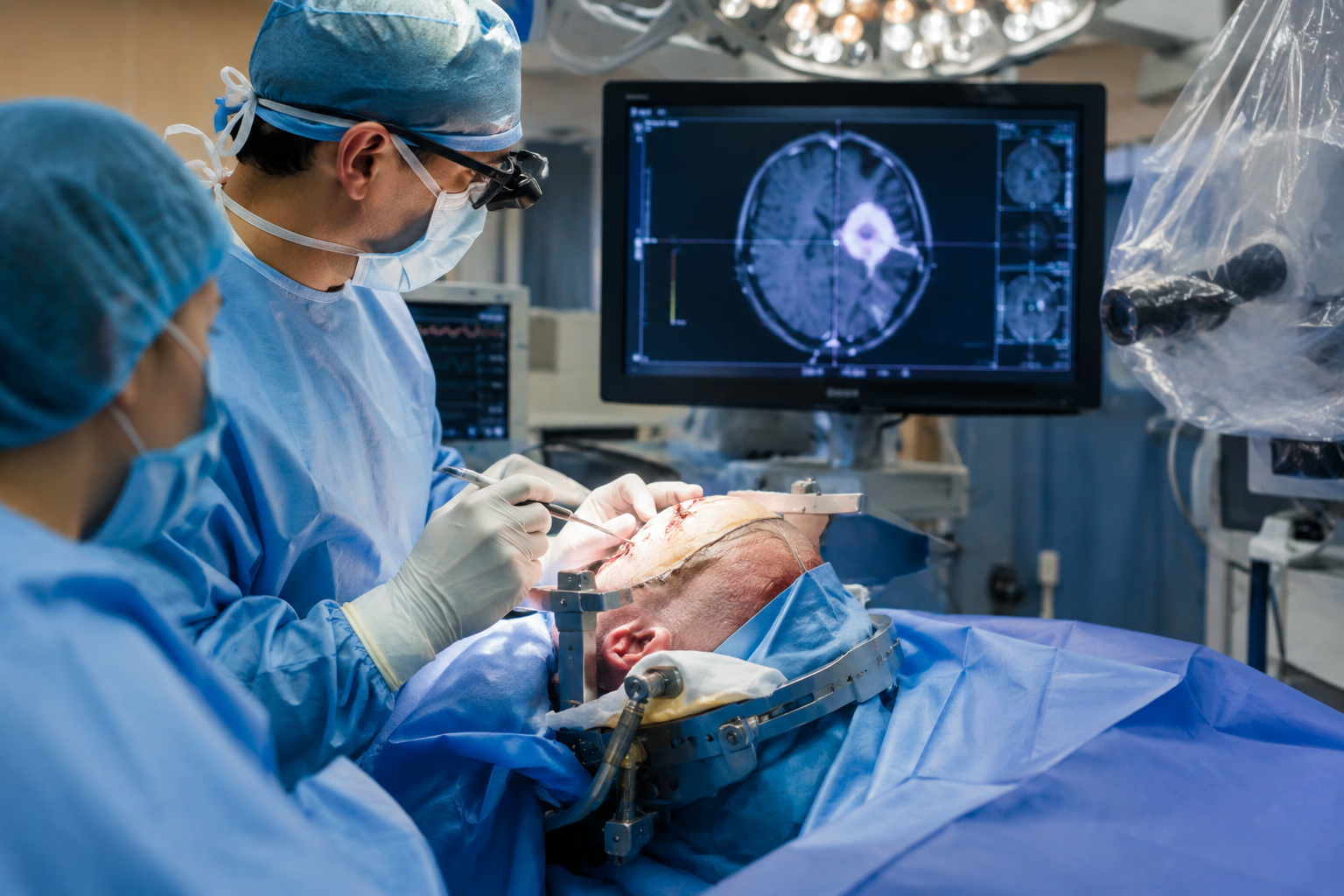
Brain tumor surgery is planned around one main priority: treating the tumor while protecting as much healthy brain tissue as possible. What happens during the operation depends on the tumor’s location, size, type, and how close it is to areas that control important functions.
For patients and families, knowing what happens before, during, and after surgery can make the process easier to understand.
How Is Brain Tumor Surgery Planned?
The process starts with detailed evaluation and imaging. MRI or other brain scans help the surgical team understand where the tumor is located and how it relates to nearby brain structures.
Doctors may also evaluate speech, memory, movement, vision, and other neurological functions. This information helps determine the safest surgical approach.
The planned procedure can vary from a small biopsy to a more extensive operation intended to remove as much of the tumor as safely possible. Understanding brain tumor treatment options can help patients have more informed conversations with their healthcare team.
What Happens Before the Operation?
Before surgery, the patient usually meets with the neurosurgeon, anesthesia team, and other members of the care team. They review the patient’s medical history, medications, imaging results, and the planned procedure.
The patient receives instructions about eating, drinking, medications, and other preparations. On the day of surgery, the head is positioned carefully so the surgeon can reach the targeted area safely.
In some cases, specialized imaging or computer-assisted navigation may be prepared before the operation begins.
What Happens During Brain Tumor Surgery?
One common procedure is called a craniotomy. During a craniotomy, the surgeon temporarily removes a section of the skull to reach the brain.
Once the surgical area is accessible, the surgeon works toward the tumor using specialized instruments. The tumor may be removed in sections rather than as one piece. Tissue can also be collected and sent for laboratory analysis.
The amount of tumor removed depends on what can be accomplished safely. A tumor that is close to important brain structures may require a more conservative approach than one located farther away from those areas.
The surgical team continuously focuses on maintaining the patient’s safety while working around delicate brain tissue.
How Are Important Brain Functions Protected?
The brain controls many essential functions, so location matters greatly during surgery.
When appropriate, doctors may use techniques that help identify areas responsible for speech, movement, sensation, or other functions. In selected operations, the patient may be awake for part of the procedure so the surgical team can check certain functions while working near them.
This approach can be particularly useful when a tumor is located close to an important functional area.
Other procedures may use surgical navigation and updated imaging to help the team maintain orientation during the operation. One technique used in selected brain procedures is fluorescent imaging during brain surgery, which can help surgeons identify certain tumor tissue during an operation.
Is the Whole Tumor Always Removed?
Not necessarily.
Complete removal may be possible for some tumors but unsafe for others. If the tumor is closely connected to or positioned beside an important part of the brain, attempting to remove every visible portion could create unnecessary neurological risk.
In those situations, leaving a portion behind may be considered the safer choice. Further treatment or monitoring can then be planned according to the tumor’s pathology and individual circumstances.
The objective is therefore not simply to remove as much tissue as possible. It is to balance tumor treatment with preservation of brain function.
What Happens After Surgery?
After the operation, the patient is monitored closely as they recover from anesthesia. The medical team checks neurological function and watches for changes that may require attention.
Depending on the procedure and the patient’s condition, monitoring may take place in a recovery area, neurological unit, or intensive care setting.
Doctors may order follow-up imaging to evaluate the surgical area. The removed tissue is also examined to identify the tumor type and other characteristics that can help guide future treatment.
What Is Recovery Like?
Recovery differs from one patient to another. Some people experience temporary headaches, tiredness, or other symptoms after surgery. Others may need additional support for movement, speech, or daily activities.
The location of the tumor can have a major influence on recovery. A patient whose tumor was near a speech or movement area may have different recovery needs from someone whose tumor was located elsewhere.
Follow-up appointments help the medical team monitor healing, review pathology findings, and decide whether additional treatment or observation is appropriate.
What Should Patients Ask Before Surgery?
It can be helpful to prepare questions before meeting with the surgical team. Useful questions include:
- Where is the tumor located?
- What type of surgery is being recommended?
- What is the main goal of the operation?
- How much of the tumor can reasonably be removed?
- Is the tumor close to an area controlling speech or movement?
- Will brain mapping or surgical navigation be used?
- What should I expect immediately after surgery?
- How long might recovery take?
- Will I need rehabilitation?
- Could additional treatment be needed after surgery?
Having these questions answered can help patients understand why a particular surgical approach has been recommended for their situation.
Frequently Asked Questions
Is brain tumor surgery always needed?
No. Treatment depends on the tumor’s characteristics, symptoms, location, growth, and the patient’s overall condition. Some tumors may be monitored, while others require surgery or another form of treatment.
Are patients awake during brain tumor surgery?
Most brain tumor operations are performed under anesthesia. However, selected patients may undergo an awake procedure for part of the operation when testing certain brain functions could help the surgical team protect them.
Can a brain tumor come back after surgery?
Yes, depending on the type and behavior of the tumor. Surgery does not guarantee that a tumor will never return. Follow-up imaging and appointments are important for monitoring changes over time.
How long does brain tumor surgery take?
There is no standard operating time. The duration depends on factors such as the tumor’s location, size, surgical complexity, and the technique being used.
What happens to the tumor after it is removed?
The tissue is typically sent to a pathology laboratory. Specialists examine it to determine the tumor’s characteristics. These findings can help doctors decide whether further treatment or monitoring is appropriate.
Will brain tumor surgery affect memory or movement?
It can, particularly when a tumor is located near areas responsible for those functions. This is one reason surgery is carefully planned and why techniques such as brain mapping may be considered in selected cases.
When can someone return to normal activities?
There is no universal recovery timeline. It depends on the type of surgery, the patient’s overall health, the tumor’s location, and how recovery progresses. The treating team can provide guidance based on the individual case.
Final Thoughts
Brain tumor surgery involves much more than removing abnormal tissue. Every case requires careful planning around the tumor and the brain structures surrounding it.
Understanding the purpose of the operation, the techniques that may be used, and what recovery can involve gives patients a clearer picture of the process. The recommended approach should always be based on the individual’s diagnosis, imaging, overall health, and treatment goals.