
 Written by
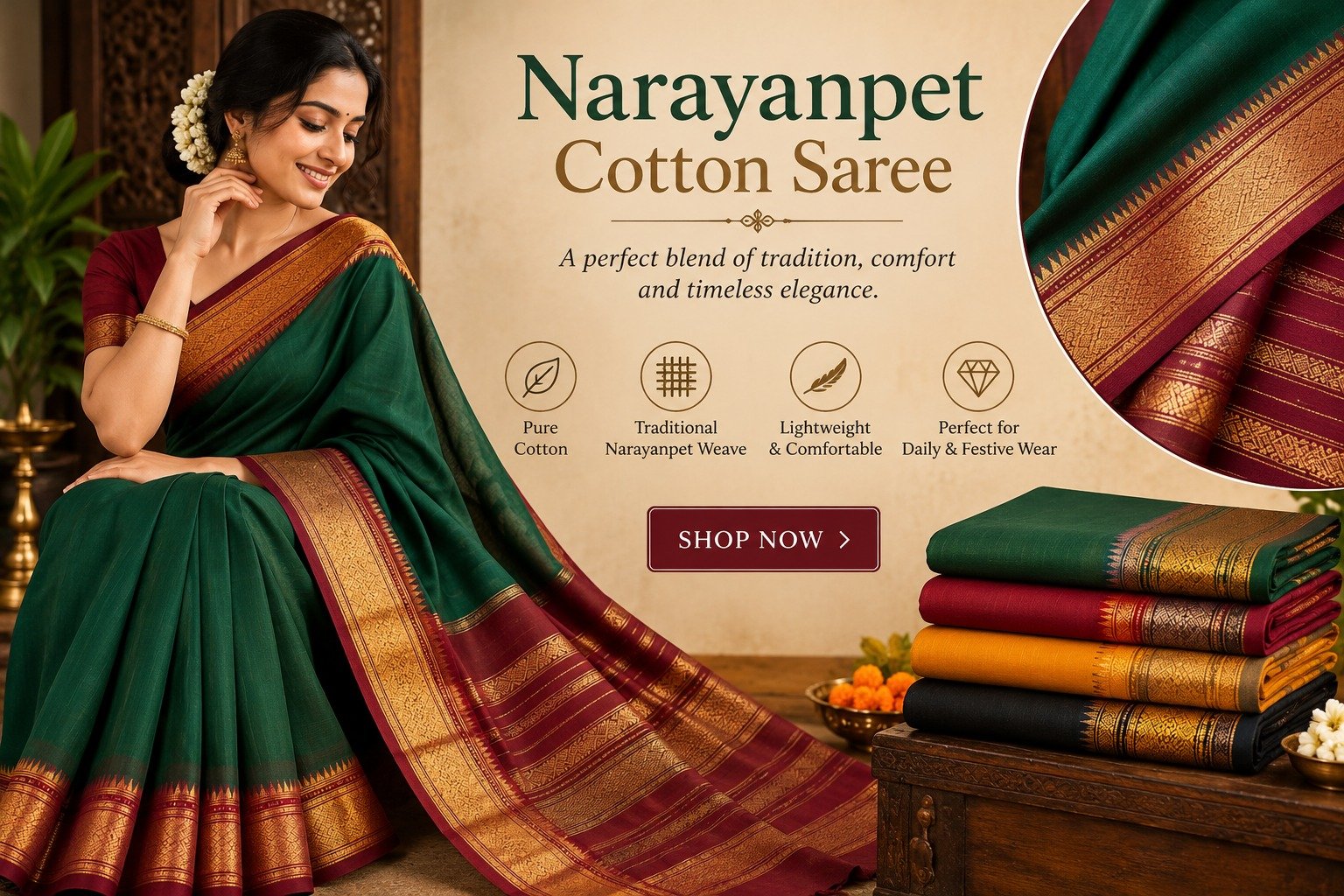
Narayanpet cotton sarees are known for their traditional weaving, comfortable cotton fabric, and distinctive borders. Originating from Narayanpet in Telangana, these sarees are a popular choice for women who appreciate authentic handloom textiles and timeless ethnic wear. Whether you are buying a saree for everyday use, office wear, festivals, or special occasions, choosing the right one requires attention to detail.
However, buyers can easily overlook important factors such as fabric quality, weaving authenticity, colour consistency, and finishing. These mistakes may lead to purchasing a saree that does not match expectations or offer good value for money.
Understanding common Narayanpet cotton saree buying mistakes can help you shop confidently and select a saree that suits your needs, style, and budget. This shopping guide explains what to check before purchasing and how to identify a saree worth investing in.
1. Ignoring the Quality of Cotton Fabric
One of the most common mistakes when purchasing a Narayanpet cotton saree is focusing on its appearance without examining the fabric quality. A saree may look attractive in photographs, but the actual material might feel different from what you expected.
Cotton sarees are valued for their breathability and comfort. However, the feel, thickness, and finish can vary depending on the yarn, weaving technique, and manufacturing process.
What to Check Before Buying
- Texture: Check whether the fabric feels comfortable against your skin and has a consistent texture.
- Weave: Look for an even weave without obvious gaps, broken threads, or irregular patches.
- Weight: Choose a lightweight or moderately weighted saree according to your comfort and intended use.
- Finishing: Examine the edges, pallu, and body for loose threads or poorly finished sections.
Good fabric checks help you assess whether the saree meets your expectations. Remember that authentic cotton does not always have a perfectly smooth or uniform appearance, especially when traditional handloom techniques are involved.
2. Confusing Handloom Sarees with Machine-Made Alternatives
Another mistake is assuming that every saree marketed as a Narayanpet cotton saree is traditionally handwoven. The market includes different production methods, and descriptions may not always explain them clearly.
Traditional Narayanpet handloom sarees are associated with a regional weaving heritage and characteristic designs. However, a product’s name or traditional-looking border alone does not prove that it was handwoven.
How to Check Authenticity
Before purchasing, ask the seller about the saree’s origin, weaving method, and production details. Look for transparent product descriptions that explain whether the saree is handloom, powerloom, or produced using another method.
You can also check whether the seller provides reliable information about the weaver, artisan group, or source of the textile.
Be cautious of claims such as “100% authentic handloom” when no supporting details are available. Not every handloom saree has an official certification, so the absence of a label alone does not prove that a saree is imitation.
3. Choosing a Saree Based Only on Price
Price is an important consideration, but selecting the cheapest option without comparing quality can be disappointing. Two sarees that look similar may differ in yarn quality, weaving method, finishing, design complexity, and overall craftsmanship.
At the same time, a high price does not automatically guarantee superior quality or authenticity.
How to Compare Value for Money
Consider the following factors before deciding:
- Fabric quality and comfort
- Weaving method and origin
- Border and pallu detailing
- Colour quality and finishing
- Seller reputation and return policy
Compare similar products rather than judging prices across sarees with different materials and production methods. If a seller offers an unusually low price for a saree described as premium handloom, ask for more details before placing your order.
A sensible shopping guide should focus on the balance between price, quality, and suitability rather than price alone.
4. Overlooking Important Fabric Checks
When shopping online, buyers cannot touch or inspect the saree directly. This makes detailed product information especially important. Even when purchasing in person, overlooking basic fabric checks can result in avoidable disappointment.
Essential Fabric Checks
Inspect the weave: Look closely at the saree body, border, and pallu. The weaving should appear reasonably consistent, without unexpected holes or significant defects.
Check the edges: Examine the selvedges and finishing. Poorly finished edges or excessive loose threads may indicate a quality issue.
Review the fabric composition: Confirm whether the saree is pure cotton, a cotton blend, or another material. Do not assume that every product labelled “cotton saree” contains only cotton.
Ask about care instructions: Check whether the saree requires special washing methods, separate colour washing, or other precautions.
Minor variations may occur in handcrafted textiles. The important distinction is between normal characteristics of traditional weaving and defects that affect durability or appearance.
5. Not Checking Colours and Border Details Properly
Narayanpet cotton sarees are appreciated for their traditional borders, contrasting colours, and distinctive combinations. Yet buyers sometimes select a saree based on a single photograph without checking the finer details.
Online images can look different because of lighting, camera settings, and screen brightness. As a result, the actual colour may vary slightly from the displayed image.
How to Avoid Colour-Related Mistakes
- Review multiple product photographs, including close-ups.
- Examine the border, pallu, and body colours separately.
- Read the product description for colour and design details.
- Check whether the seller mentions possible variations in handwoven products.
- Ask for additional photographs if important details are unclear.
If you are buying a saree for a particular blouse, jewellery set, or occasion, compare the colour carefully before ordering. This can help you avoid choosing a shade that does not coordinate with your existing wardrobe.
6. Buying Without Considering the Occasion
A beautiful saree may not always be the most practical choice for your intended use. Some buyers focus entirely on colour or design and forget to consider comfort, maintenance, and occasion.
For everyday wear, office use, or long events, breathable cotton and manageable weight may be priorities. For festivals and family gatherings, you might prefer a more prominent border, a contrasting pallu, or a colour that complements traditional accessories.
Choose According to Your Needs
Before purchasing, consider:
- Daily wear: Prioritise comfort, ease of maintenance, and versatility.
- Office wear: Look for balanced colours and designs suitable for your workplace.
- Festivals: Consider traditional colour combinations and decorative borders.
- Gifting: Choose versatile designs and confirm the recipient’s colour preferences.
Thinking about the occasion first makes it easier to narrow down your choices and avoid buying a saree that remains unused in your wardrobe.
7. Ignoring Saree Length and Blouse Requirements
Saree length is another detail that buyers sometimes overlook. Although many sarees follow familiar length conventions, measurements can vary by product and seller. Blouse fabric may also be included, excluded, or supplied differently depending on the listing.
A saree that does not provide the coverage or draping length you prefer may require additional adjustments.
What to Confirm
Check the exact saree length and width in the product specifications. If blouse fabric is included, confirm its availability, length, and whether it is stitched or unstitched.
If you prefer a particular draping style or need extra length for pleats, verify the measurements before buying. Do not rely solely on general product photographs to estimate the size.
8. Skipping Seller Reviews and Return Policies
Even a well-described product can become a disappointing purchase if the seller provides poor customer service or unclear return conditions.
This is especially important when buying Narayanpet cotton sarees online, where you depend on photographs, product descriptions, and seller information.
How to Evaluate an Online Seller
- Read recent customer reviews for comments about fabric quality and colour accuracy.
- Check whether product photographs represent the actual item.
- Review shipping charges and estimated delivery times.
- Understand the return, exchange, and refund conditions.
- Look for clear contact information and detailed product specifications.
Pay attention to repeated complaints about misleading descriptions, delayed deliveries, or differences between the advertised and received products. Also check whether returns are accepted for colour differences, manufacturing defects, or incorrect items.
Before paying, make sure you understand the seller’s policies, especially if the saree is expensive or intended as a gift.
9. Neglecting Care and Maintenance Requirements
Cotton sarees are often chosen for their comfort, but their maintenance requirements should not be ignored. Washing methods, drying conditions, and storage can affect the appearance and longevity of the fabric.
Some sarees may experience slight shrinkage or colour bleeding, depending on the dyes and finishing processes used.
Ask About Proper Care
Read the care label or ask the seller for washing instructions. If colour stability is uncertain, avoid washing the saree together with light-coloured garments. Follow the recommended drying and ironing instructions, and store the saree in a clean, dry place.
Do not assume that every cotton saree can be machine-washed safely. Following the correct care method can help preserve its colours, texture, and overall appearance.
10. Following Trends Without Considering Personal Style
Popular colours and patterns can influence buying decisions, but trends may not suit everyone’s preferences or wardrobe. Purchasing a saree simply because it is fashionable can lead to an item that is difficult to style or rarely worn.
Instead, consider which colours complement your wardrobe, what types of borders you prefer, and how often you expect to wear the saree.
A versatile Narayanpet cotton saree can be styled with different blouses, jewellery, and footwear, making it useful for multiple occasions. If you prefer traditional styling, classic colour combinations may be a practical choice. If you enjoy contemporary fashion, you can explore contrasting blouses and modern accessories.
Choose a saree that reflects your personal style rather than relying entirely on current trends.
Final Checklist Before Buying a Narayanpet Cotton Saree
Before completing your purchase, review these essential points:
- Confirm the fabric composition and weaving method.
- Examine the weave, edges, border, and pallu.
- Compare prices with similar-quality sarees.
- Check colours, measurements, and blouse fabric details.
- Match the design and comfort level to your intended occasion.
- Read seller reviews and understand the return policy.
- Confirm care instructions and delivery details.
Conclusion
Avoiding common Narayanpet cotton saree buying mistakes begins with looking beyond appearance and price. Fabric quality, weaving authenticity, colour accuracy, finishing, measurements, and seller reliability all contribute to a satisfying purchase.
Whether you are buying your first Narayanpet cotton saree or adding another traditional piece to your collection, take time to review the product details and ask questions when information is unclear. A thoughtful approach helps you choose a saree that suits your budget, comfort preferences, and personal style.
By following these practical fabric checks and shopping tips, you can make a more informed decision and enjoy your Narayanpet cotton saree with greater confidence.