
 Written by
A receding hairline can affect a woman’s facial appearance and make the forehead appear more prominent. It may develop because of genetics, hormonal changes, repeated tight hairstyles, or certain medical conditions that affect hair growth. Depending on the cause, hair restoration surgery may help improve hairline coverage and create a more balanced appearance. A Female Hair Transplant in Dubai may be suitable for women who have stable hair loss, healthy donor follicles, and realistic expectations about the outcome. The procedure involves transferring hair follicles from a donor area to the affected hairline, but a medical assessment is essential to determine whether transplantation is appropriate.
Understanding Hairline Changes in Women
A woman’s hairline can change gradually or become noticeably thinner over a shorter period. Some women experience thinning around the temples, while others notice that the frontal hairline appears less dense or that the forehead looks wider. These changes may result from female pattern hair loss, traction alopecia caused by repeated pulling, hormonal influences, or other scalp conditions. Identifying the cause is important because not every receding hairline requires surgery. Some forms of hair loss may improve with medical treatment, while permanent damage to follicles may require a different approach.
How Hair Transplantation Restores the Hairline
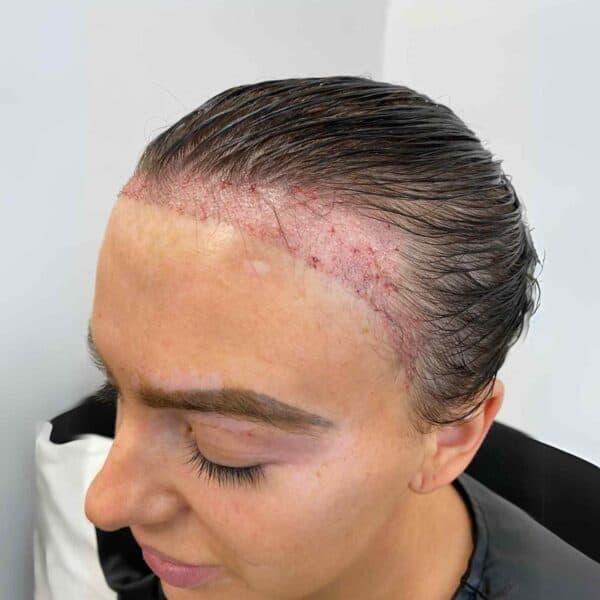
Hair transplantation restores hairline coverage by moving healthy follicular units from a donor area, usually at the back or sides of the scalp, into the thinning or receding region. The surgeon places the grafts according to the natural direction, angle, and distribution of hair growth. This careful placement helps create a softer and more natural-looking hairline rather than an artificial, straight line. The procedure redistributes existing follicles, so the available donor hair determines how much coverage can be achieved. Results vary according to scalp health, graft survival, and the extent of hair loss.
Causes of a Receding Hairline
Several conditions can contribute to a receding hairline in women. Female pattern hair loss commonly causes reduced density across the top of the scalp and may affect the frontal region. Traction alopecia can develop when hairstyles repeatedly pull on the hairline, especially tight ponytails, braids, or extensions. Hormonal changes, nutritional deficiencies, thyroid conditions, and certain medications can also affect hair growth. Frontal fibrosing alopecia is another condition that can cause progressive recession and permanent follicle damage. Because treatment differs between these causes, unexplained or progressive hairline loss should be assessed by a qualified medical professional before surgery.
Suitable Candidates for Hairline Restoration
Women with a stable receding hairline, adequate donor hair, and a clear treatment goal may be suitable candidates for transplantation. The surgeon evaluates the density and quality of the donor area, the extent of hair loss, scalp health, and the likelihood of further recession. Women with widespread thinning may have fewer healthy follicles available for transfer. Those with active inflammatory or scarring conditions may need specialist treatment before transplantation can be considered. A suitable candidate should also understand that surgery improves selected areas but does not prevent all future hair loss.
Hair Transplant Techniques for Women
Two common surgical methods are Follicular Unit Extraction (FUE) and Follicular Unit Transplantation (FUT). FUE involves removing individual follicular units from the donor area, generally leaving small extraction marks. FUT involves removing a narrow strip of scalp and usually leaves a linear scar. Both methods can be used for hairline restoration in selected patients, but the best option depends on donor density, scalp characteristics, hairstyle preferences, and the number of grafts needed. A qualified surgeon should explain the benefits, limitations, scars, and recovery requirements of each technique before recommending a procedure.
Creating a Natural-Looking Hairline
A natural-looking hairline depends on more than placing grafts along the forehead. The surgeon must consider facial proportions, the patient’s age, existing hair growth, hair thickness, and the direction in which individual follicles grow. A softly irregular hairline may look more natural than a perfectly straight edge. The treatment plan should also preserve enough donor hair for possible future needs. Placing too many grafts in a small area or creating an excessively low hairline can produce an unnatural appearance and use donor follicles unnecessarily. Careful planning helps balance current cosmetic goals with long-term hair health.
Managing Traction Alopecia
Traction alopecia is a potential cause of hairline recession, particularly in women who regularly wear tight hairstyles that place tension on the hair roots. Early traction alopecia may improve when the pulling stops, allowing weakened follicles to recover. If traction continues for a long time, however, permanent follicle damage can occur. In selected cases where hair loss has stabilised and the donor area is healthy, transplantation may help restore coverage along the affected hairline. The first step is to stop the damaging hairstyle practices and obtain a medical assessment to determine whether the follicles are likely to recover.
When a Hair Transplant May Not Be Appropriate
Transplantation may not be the best first choice when the hairline is receding because of an active scalp disease, untreated medical condition, or temporary shedding. Certain scarring alopecias can progressively destroy follicles and may continue to affect the scalp after surgery. Operating while inflammation is active can increase the risk of poor results or further hair loss. Women with insufficient donor hair or diffuse thinning may also be unsuitable candidates. A specialist may recommend medical treatment, investigations, or a period of monitoring before deciding whether surgery is safe and likely to provide meaningful improvement.
Recovery After Hairline Transplantation
Following surgery, patients may experience temporary redness, swelling, tenderness, itching, and small scabs around the treated area. The transplanted hair commonly sheds during the first few weeks, which is a normal stage of the growth cycle. New hair growth usually develops gradually over the following months. Many patients begin to notice improvement around three to six months, while more complete results may take nine to twelve months or longer. Following postoperative instructions, protecting the scalp, and attending follow-up appointments can support recovery. Increasing pain, fever, spreading redness, or unusual discharge should be reported promptly.
Long-Term Results and Hair Maintenance
Transplanted follicles may continue producing hair for many years, but the procedure does not stop the underlying cause of hair loss. Natural hair behind or around the restored hairline may continue thinning, which can change the appearance over time. Some women may benefit from ongoing medical treatment to help preserve existing hair, depending on the diagnosis and individual circumstances. Regular monitoring can help identify changes early and guide further care. A long-term plan should account for donor hair limitations, future hair loss, and the patient’s expectations rather than focusing only on immediate hairline improvement.
Conclusion
Female hair transplant can restore coverage along a receding hairline in selected women by transferring healthy follicles to areas where hair has become sparse or permanently lost. The best results depend on the cause of recession, donor hair quality, scalp health, surgical planning, and the likelihood of future hair loss. Women considering a Female Hair Transplant in Dubai should have a detailed consultation to determine whether surgery is appropriate or whether medical treatment may be more effective. A carefully planned approach can help improve hairline appearance while protecting existing hair and setting realistic expectations.
Frequently Asked Questions
1. Can a female hair transplant restore a receding hairline?
Yes, transplantation may restore hairline coverage in suitable women with stable hair loss and sufficient donor hair. The result depends on the cause of recession, scalp condition, and graft survival.
2. What causes a receding hairline in women?
Common causes include female pattern hair loss, traction from tight hairstyles, hormonal changes, and certain medical or inflammatory scalp conditions. A medical evaluation helps identify the specific cause.
3. Is a hair transplant suitable for traction alopecia?
It may be suitable when traction alopecia has stabilised and permanent follicle damage has occurred. Tight hairstyles should be avoided, and a specialist should assess the scalp before surgery.
4. Will a transplanted hairline look natural?
It can look natural when the surgeon carefully considers hair direction, angle, density, and facial proportions. However, results vary and cannot be guaranteed.
5. How long does it take for a transplanted hairline to grow?
Transplanted hair often sheds during the first few weeks. New growth generally develops over several months, with fuller results often taking nine to twelve months or longer.
6. Can a receding hairline return after transplantation?
Transplanted follicles may continue growing, but existing hair around them can continue thinning. Ongoing hair-loss management may be needed to maintain a balanced appearance.
7. Is FUE or FUT better for female hairline restoration?
Neither technique is best for every woman. FUE removes individual follicular units, while FUT removes a strip of scalp. The appropriate method depends on donor hair, scalp characteristics, and treatment goals.
8. Should women treat a receding hairline before considering surgery?
Yes. Identifying the cause is important because some conditions respond to medical treatment, while active inflammatory or scarring disorders may make surgery unsuitable. A specialist should assess the hairline before treatment.