
 Written by
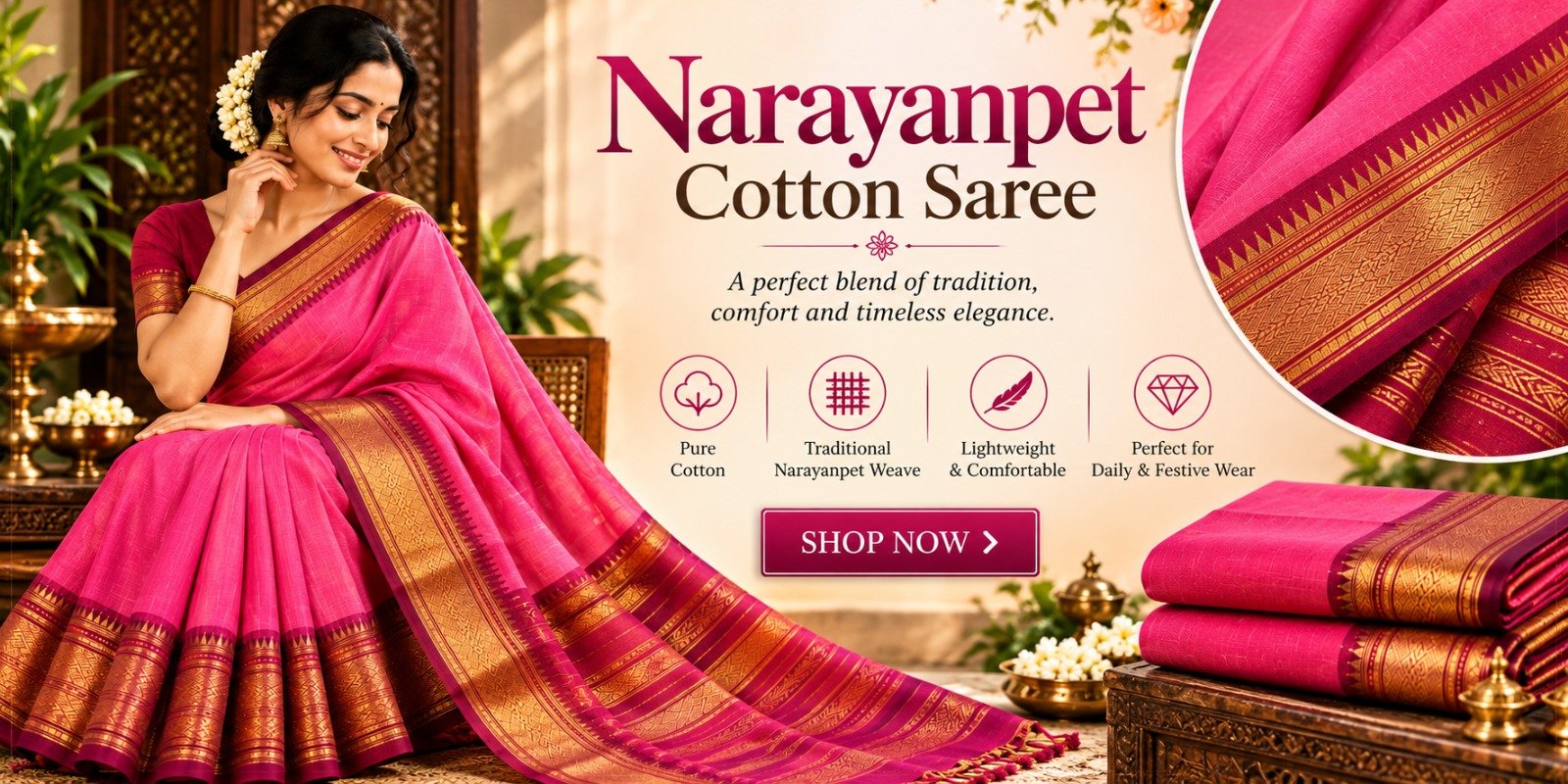
Choosing the right saree for a cultural event is about more than selecting a beautiful colour or design. The outfit should reflect the occasion, feel comfortable throughout the day, and complement the traditions being celebrated. A Narayanpet cotton saree is a thoughtful choice for cultural programmes, traditional ceremonies, festive gatherings, and community celebrations because of its distinctive woven patterns and classic South Indian appeal.
When selecting a narayanpet saree cultural event outfit, consider the event’s formality, the saree’s colour, border design, fabric feel, and blouse combination. These details help create an elegant look without making the outfit feel excessive. Whether you are attending a cultural festival, performing on stage, or participating in a family celebration, the right saree can help you look polished while staying connected to traditional clothing.
Why Choose a Narayanpet Cotton Saree for a Cultural Event?
Narayanpet cotton sarees are associated with Narayanpet, a town in Telangana known for its traditional handloom weaving. They are appreciated for their characteristic borders, structured drape, and traditional design elements. Depending on the weave and finishing, individual sarees may vary in texture, weight, colour combinations, and decorative details.
These qualities make Narayanpet sarees suitable for different types of cultural occasions.
A Traditional Look with Distinctive Borders
Borders are among the most recognisable features of many Narayanpet sarees. Contrasting borders, stripes, and geometric details can give the saree a defined appearance without requiring heavy embroidery or elaborate embellishments.
For a formal cultural programme, a saree with a prominent contrasting border can create a striking look. For a smaller gathering, a simpler design may feel more appropriate.
Comfortable for Long Events
Cultural events can involve several hours of sitting, walking, standing, or participating in activities. Cotton sarees can be a practical option because they are generally breathable and comfortable in warm weather.
However, comfort depends on the individual saree’s weave, thickness, finishing, and how it is draped. Before buying, check the fabric feel and ensure the saree can be managed comfortably throughout the event.
Suitable for Different Ages and Occasions
A Narayanpet cotton saree can work for students attending cultural functions, adults participating in traditional ceremonies, and women dressing for family celebrations. The overall appearance can be adjusted through colour selection, blouse styling, jewellery, and draping.
This versatility makes it a useful addition to a traditional wardrobe, particularly if you attend cultural events regularly.
- Choose the Saree According to the Type of Event
Before exploring colours and patterns, understand the event’s atmosphere. A college cultural day, a classical dance programme, a regional festival, and a formal traditional ceremony may all call for different styling choices.
For College and Community Cultural Programmes
For daytime programmes, choose a saree with a balanced colour combination and a manageable drape. Bright colours, traditional borders, and simple geometric patterns can create an appealing ethnic outfit without looking overly formal.
If you will be moving between activities or helping organise the event, prioritise a saree that is easy to pleat and secure.
For Festivals and Traditional Ceremonies
Festivals and family ceremonies often allow richer colours and more noticeable borders. Deep red, maroon, green, mustard, royal blue, and other traditional shades can work well, depending on your personal preference and the event’s dress code.
For a more formal traditional occasion, pair the saree with a well-fitted blouse, carefully selected jewellery, and neat pleats. You do not necessarily need heavy accessories; a coordinated appearance is often more effective.
For Stage Performances and Cultural Presentations
If you are participating in a stage programme, consider how the saree will appear under bright lighting and from a distance. Strong colour contrast and clearly visible borders may help define the outfit.
Check the event’s costume requirements before purchasing. A dance performance or regional presentation may require a specific colour palette, draping style, or traditional design.
- Select a Colour That Matches the Occasion
Colour influences the overall mood of your outfit. The best choice depends on the event, the time of day, your preferences, and the blouse or accessories you already own.
Colour choice | Suitable styling direction |
Red or maroon | Traditional ceremonies and festive gatherings |
Green | Cultural celebrations and classic ethnic styling |
Mustard or yellow | Daytime programmes and bright festive looks |
Blue | Community events and understated elegance |
Pink | Family celebrations and lively cultural functions |
Black or darker shades | Contemporary ethnic styling, where appropriate for the occasion |
These are styling suggestions rather than strict rules. Cultural expectations vary between families, regions, and events, so check any specific dress requirements before making a final choice.
Also, inspect the colour in natural light if possible. Product photographs may look different from the actual fabric because of lighting, screen settings, or image editing.
- Check the Border, Motifs, and Weaving Details
A saree’s design should complement the event rather than compete with every other element of your outfit.
Choose Borders That Suit the Occasion
A broad or contrasting border can create a more prominent traditional appearance, while a narrow border may feel subtle and understated. Think about the blouse design and jewellery you plan to wear before deciding.
If the saree already has a striking border, a simpler blouse can maintain visual balance. If the saree has minimal detailing, you can introduce interest through a textured blouse or carefully chosen accessories.
Look at the Overall Weave and Finish
Do not judge a saree only by its border or product photograph. Examine the fabric closely and look for consistent weaving, a neat finish, and any visible flaws. Check the pallu, edges, and blouse piece, if included.
If you are buying online, review close-up images, product specifications, care instructions, and the seller’s return policy. Ask whether the saree is handloom-woven or produced using another method if that distinction matters to you. Avoid assuming that every saree with a traditional appearance has identical weaving characteristics.
- Pick a Blouse That Complements the Saree
The blouse can transform the same saree from a simple daytime outfit into a more formal traditional look.
For a cultural programme, a plain blouse in a colour taken from the saree’s border is a reliable option. A contrasting blouse can create a stronger visual effect, while a matching blouse produces a coordinated appearance.
Consider these practical details:
- Neckline: Choose a neckline that suits the event and your comfort preferences.
- Sleeves: Short, elbow-length, or three-quarter sleeves can all work, depending on the overall design.
- Fabric: Select a fabric that feels comfortable and sits well with the saree.
- Fit: Ensure the blouse allows easy movement, especially if you will be performing or participating in activities.
- Finishing: Neat stitching and secure closures help the outfit look well-finished.
If the saree comes with an unstitched blouse piece, check its size and fabric before assuming it will be sufficient for your preferred design.
- Style Your Ethnic Outfit with Suitable Accessories
Accessories should support the saree’s traditional character without making the overall appearance feel crowded.
For a daytime event, small earrings, a simple chain, comfortable footwear, and a neat hairstyle may be enough. For a festive ceremony, you could choose traditional earrings, bangles, or a necklace that complements the saree’s colours.
Keep the saree’s design in mind when selecting jewellery. A heavily decorated border usually works well with simpler accessories, while a relatively plain saree may allow a more noticeable necklace or pair of earrings.
Footwear deserves attention, too. Choose a pair that is suitable for the venue and allows you to walk safely. If the event includes standing for long periods, comfort should take priority over appearance alone.
- Check Fabric Quality and Fit Before Buying
A saree may look attractive online but feel different when worn. Check a few practical details before placing an order.
Fabric and texture: Read the material description and confirm whether the saree is cotton or a cotton blend. Look for information about thickness, softness, and finishing.
Measurements: Verify the saree length and width, especially if you prefer a particular draping style or need extra fabric for pleats.
Colour accuracy: Read reviews and inspect customer photographs when available. These can provide a more realistic impression of the product.
Care requirements: Check whether the saree needs special washing or handling. Cotton sarees may shrink, fade, or change texture if cared for incorrectly, depending on their dyes and finishing.
Seller reliability: Review product details, delivery timelines, return conditions, and the seller’s contact information. If you need the saree for a specific event, order early enough to allow for delivery, blouse stitching, and any necessary alterations.
- Avoid Common Buying Mistakes
Even a beautiful saree may not be the right choice if it does not suit the occasion or your practical needs.
Avoid choosing a design only because it is trending. Instead, consider whether you will feel comfortable wearing it and whether it fits the event’s expectations.
Do not overlook blouse stitching time, the actual fabric composition, or the cost of alterations. If you are shopping on a budget, compare the total outfit cost rather than the saree price alone.
Finally, avoid assuming that a higher price automatically guarantees better quality. Compare fabric details, weaving consistency, finishing, and seller transparency before making a decision.
Conclusion
A Narayanpet cotton saree can be an elegant choice for a cultural event when its design, colour, and styling suit the occasion. Begin by identifying the event’s dress expectations, then choose a comfortable fabric, a complementary border, and a blouse that creates a balanced appearance.
Whether you are dressing for a festival, a community gathering, or a traditional ceremony, focus on quality, comfort, and personal style. A thoughtfully selected narayanpet saree cultural event outfit can celebrate cultural clothing while remaining practical enough to enjoy the entire occasion.