
 Written by
Hair loss affects people of all ages, and it often influences confidence, appearance, and daily comfort. Many individuals spend years trying topical products, supplements, and home remedies before considering a lasting solution. Modern hair restoration has advanced considerably, and follicular unit extraction is now one of the most widely discussed methods. For those researching FUE Hair Transplant in Islamabad , understanding how the procedure works and how it can be adapted to personal needs is an important first step. Glamorous Aesthetic Clinic approaches hair restoration as a personalized service. No two patients have the same hair pattern, donor supply, or goals, so the plan should reflect those differences.
What Is FUE Hair Transplant?
Follicular unit extraction is a technique in which individual hair follicles are harvested from a donor area, usually the back or sides of the scalp, where hair is generally more resistant to thinning. These follicles are then implanted into areas where hair has thinned or been lost.Unlike older strip-based methods, FUE does not require the removal of a linear section of scalp. Follicles are extracted one at a time using a fine micro-punch tool. This typically results in tiny, scattered marks that are less noticeable than a linear scar, which is one reason many patients prefer it, particularly those who like to wear their hair short.
Why Individual Planning Matters?
Hair loss has many causes, including genetics, hormonal changes, stress, nutritional factors, and medical conditions. Because of this, a transplant is not the right answer for every person. A responsible clinic evaluates the underlying cause before recommending any procedure.Individual factors that influence planning include the pattern and stage of hair loss, the density and quality of donor hair, hair texture and color, scalp condition, age, and overall health. A person with a receding hairline has different needs from someone with thinning at the crown, and both differ from someone seeking to restore density in a specific area. Tailored planning helps ensure that the treatment suits the person rather than following a standard template.
Who May Be a Suitable Candidate?
Suitability depends on several considerations. Candidates generally need sufficient healthy donor hair, realistic expectations, and good general health. Hair loss that is still progressing may require additional medical management to protect existing hair, and the practitioner may recommend waiting or combining approaches.Some people are not ideal candidates, including those with very limited donor supply, certain scalp conditions, or unstable underlying health issues. An honest assessment is essential, and patients should feel comfortable hearing that a procedure is not appropriate at a given time. Glamorous values this transparency because it protects patients from disappointment and unnecessary risk.
Designing the Hairline and Treatment Plan
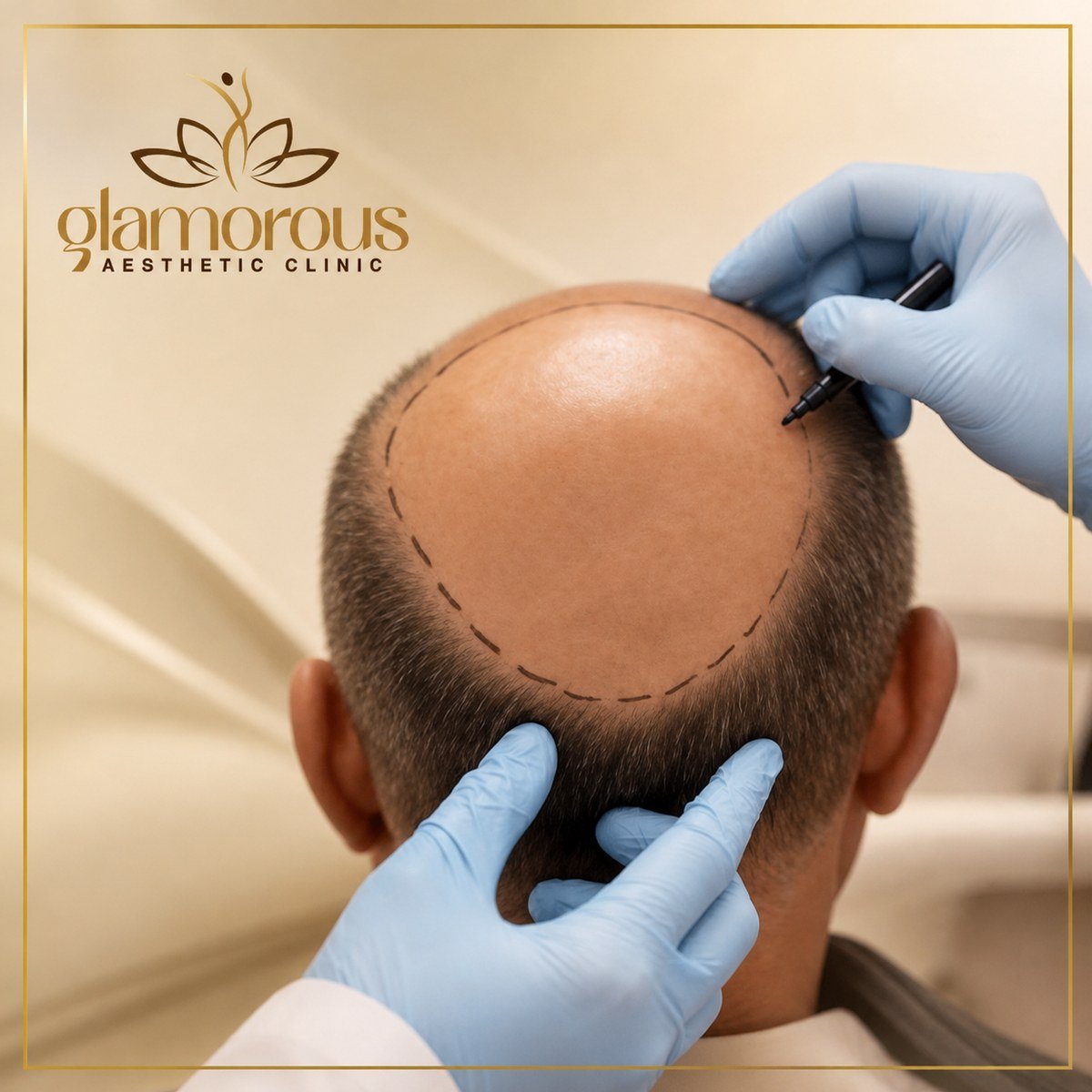
Hairline design is one of the most important parts of a natural-looking result. A good design considers facial proportions, age, hair direction, and the patient’s long-term outlook. A hairline that suits a person in their twenties may not look natural a decade later, so conservative and forward-thinking planning is usually preferred.The practitioner also estimates the number of grafts that may be needed and how they will be distributed. Density is placed strategically, with greater emphasis on areas that frame the face. Patients are encouraged to share reference preferences, and the team explains what is achievable based on their individual donor supply.
What Happens During the Procedure?
On the day of treatment, the scalp is cleaned and local anesthesia is applied to keep the patient comfortable. Follicles are carefully extracted from the donor area, then prepared and implanted into the recipient zones according to the agreed design. Angle, direction, and spacing are managed with care so that the new hair blends naturally with existing hair.Procedure length depends on the number of grafts involved. Patients are generally awake during treatment and can take breaks as needed. Hygiene and safety protocols are followed throughout, and the team keeps the patient informed at each stage.
Recovery and Aftercare
Recovery is usually straightforward, though it varies between individuals. Mild redness, swelling, and small scabs around treated areas are common in the early days. Patients receive clear instructions on washing the scalp, sleeping position, avoiding certain activities, and protecting the area from sun exposure.Transplanted hairs often shed within the first few weeks, which is a normal part of the cycle. New growth typically begins after a few months and continues to mature gradually over the following period. Patience is important, since final results develop slowly rather than immediately. Follow-up visits allow the practitioner to monitor progress and answer any concerns.
Supporting Results Over the Long Term
A transplant addresses the areas treated, but it does not stop hair loss elsewhere on the scalp. For this reason, some patients are advised to consider additional measures to protect existing hair. These may include medical treatments, scalp care routines, and attention to nutrition and stress management.Healthy habits support the overall condition of the hair. Balanced meals, adequate sleep, gentle handling, and avoiding harsh treatments all contribute to better scalp health. The practitioner can advise on a sensible long-term routine that fits the patient’s lifestyle.
Setting Realistic Expectations
Honest expectations are central to patient satisfaction. A transplant can improve density and restore a natural-looking hairline, but it cannot recreate hair exactly as it was in youth. Results depend on donor quality, the extent of loss, and individual healing.Glamorous encourages patients to think of treatment as a gradual improvement process. Photographs, clear explanations, and open conversation help patients understand what to anticipate. This approach reduces uncertainty and supports confident decision-making.
Choosing the Right Clinic
Selecting a provider is as important as selecting the technique. Patients should look for qualified practitioners, a clean and well-managed environment, transparent communication, and a willingness to explain risks and limitations. Clear information about the number of sessions, aftercare, and follow-up support also reflects a professional standard.Glamorous Aesthetic Clinic places patient understanding at the center of its service. Each person is treated as an individual, and every recommendation is based on assessment rather than assumption.
Conclusion
FUE hair restoration can be a meaningful option for people seeking a natural-looking improvement in hair density, provided the plan is built around their specific needs. The key elements are a thorough consultation, honest assessment, careful hairline design, skilled execution, and attentive aftercare.
Contact us at our website: https://www.glamorousclinic.com.pk/
When these elements come together, patients are better positioned to achieve results they feel comfortable with over time. Glamorous Aesthetic Clinic is committed to providing that level of personalized care, and every recommendation is based on careful assessment of the individual. If you are considering treatment, begin with a professional consultation and choose a provider who values safety, clarity, and realistic expectations.