Written by
Bicycle Market to Reach USD 163.51 Billion by 2032, Driven by Sustainable Mobility and Growing Cycling Infrastructure Investments
The global Bicycle Market is experiencing significant growth as consumers increasingly adopt environmentally friendly transportation, fitness-oriented lifestyles, and sustainable mobility solutions. Bicycles are becoming an important alternative to conventional transportation because they offer affordable commuting, reduce carbon emissions, and promote physical well-being. Growing urban congestion, rising fuel costs, government investments in cycling infrastructure, and increasing popularity of recreational cycling are further supporting market expansion. Additionally, technological advancements in lightweight frames, electric-assist systems, carbon-fiber materials, and smart cycling accessories are creating new opportunities for manufacturers worldwide.
To know the most attractive segments, click here for a free sample of the report: https://www.maximizemarketresearch.com/market-report/global-bicycle-market/20033/
1. Bicycle Market Estimation, Growth Drivers and Opportunities
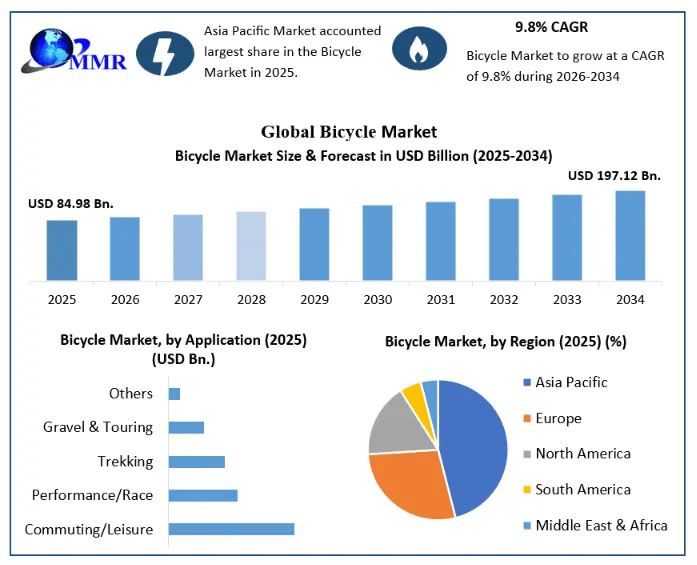
According to Maximize Market Research, the global bicycle market was valued at USD 84.98 billion in 2025 and is anticipated to reach approximately USD 163.51 billion by 2032, expanding at a CAGR of 9.8% during the forecast period of 2026–2032. The market is witnessing considerable growth due to increasing health consciousness, rising environmental concerns, and the growing adoption of bicycles for daily transportation and recreational activities.
Growing awareness of health and physical fitness is a major factor contributing to market expansion. Consumers are increasingly choosing cycling as a convenient way to improve cardiovascular health, maintain physical fitness, and reduce sedentary lifestyles. Additionally, the rising popularity of recreational cycling, mountain biking, road racing, and cycling tourism is increasing demand for bicycles across different product categories. Growing participation in cycling events and outdoor fitness activities is further supporting market development.
Government initiatives promoting eco-friendly transportation are also driving market growth. Several countries are investing in dedicated cycling infrastructure, including bicycle lanes, parking facilities, urban mobility networks, and improved road safety systems. These developments are encouraging consumers to adopt bicycles as an alternative to motorized transportation while helping reduce traffic congestion, air pollution, and greenhouse gas emissions. Increasing urbanization and the need for affordable commuting solutions are further strengthening bicycle adoption.
The expanding popularity of electric bicycles is creating significant growth opportunities for manufacturers. E-bikes combine traditional cycling with electric motor assistance, making commuting, recreational riding, and long-distance travel more convenient. Technological advancements in lithium-ion batteries, motor performance, lightweight materials, and charging systems are improving product efficiency and consumer appeal. Moreover, increasing demand for convenient and energy-efficient mobility solutions is accelerating the adoption of electric bicycles among urban commuters and older consumers.
Furthermore, continuous product innovation is opening new opportunities across the bicycle industry. Manufacturers are incorporating carbon-fiber frames, aerodynamic structures, advanced suspension systems, and connected cycling technologies to improve performance, durability, and riding comfort. The expansion of e-commerce platforms, direct-to-consumer distribution models, bicycle subscription services, and customized product offerings is also improving market accessibility. Additionally, rising demand for cargo bicycles, folding bicycles, and premium performance models is encouraging manufacturers to diversify their portfolios and target a wider consumer base.
2. United States Bicycle Market: Latest Trends and Investments in 2024
The United States bicycle market experienced significant developments in 2024, supported by increasing interest in electric bicycles, cycling infrastructure, and domestic manufacturing. In June 2024, the proposed Domestic Bicycle Product Act attracted industry attention by seeking to encourage bicycle manufacturing within the United States through tariff-related measures and manufacturing incentives. The initiative highlighted the importance of strengthening domestic production and reducing dependence on imported bicycles and components. According to PeopleForBikes’ industry reporting, approximately USD 27.4 billion in local and state funding had been approved for safer cycling infrastructure, supporting the development of connected bicycle networks. However, manufacturers also faced inventory challenges and restructuring pressures. In March 2024, Trek Bicycle announced plans to reduce spending by approximately 10% as part of its operational restructuring strategy. Meanwhile, the growing adoption of e-bikes and direct-to-consumer distribution continued to create opportunities for innovative manufacturers. These developments demonstrate the importance of infrastructure investment, manufacturing efficiency, and electric bicycle technology in strengthening the US bicycle industry.
3. Bicycle Market Segmentation: Largest Market Share
By Product: The road bicycle segment dominated the global bicycle market in 2025. Its leadership is primarily attributed to versatility, speed, lightweight construction, and suitability for commuting, fitness, recreational cycling, and competitive racing. Increasing participation in cycling events and growing consumer interest in endurance sports are supporting demand. Manufacturers are introducing aerodynamic frames, advanced carbon-fiber materials, lightweight components, and improved braking systems to enhance performance and rider comfort.
By Design: The regular bicycle segment held the largest market share in 2025. Its dominance is supported by simple construction, affordability, easy maintenance, and suitability for everyday transportation. Regular bicycles appeal to a broad consumer base, including commuters, recreational riders, students, and fitness enthusiasts.
By Region: Asia Pacific dominated the global bicycle market in 2025. Its leadership is supported by a large consumer population, established bicycle manufacturing infrastructure, competitive production costs, and strong demand for affordable transportation solutions.
4. Bicycle Market Competitive Analysis
The global bicycle market is competitive, with manufacturers focusing on lightweight materials, advanced bicycle engineering, electric mobility, product customization, and distribution expansion. Based on the prominent companies identified in the Maximize Market Research report, five key players include Trek Bicycle Corporation, Felt Bicycles, Kona Bikes, Specialized Bicycle Components, and Cannondale Bicycle Corporation.
1. Trek Bicycle Corporation: Trek is strengthening its market position through innovative bicycle designs and electric-assist technologies. In March 2024, the company announced a restructuring initiative involving a 10% reduction in spending and a 40% reduction in model-year 2026 product SKUs to improve operational efficiency. In July 2024, Trek introduced its updated Verve+ 2 and Verve+ 3 electric bicycles featuring Bosch Smart System technology and Bluetooth connectivity. These developments demonstrate its focus on product efficiency, inventory management, and connected cycling solutions.
2. Felt Bicycles: Felt Bicycles focuses on high-performance road, triathlon, gravel, and mountain bicycles. In July 2024, its parent group PIERER Mobility increased its ownership of Felt Bicycles GmbH through an acquisition of an additional 50.1% stake. This strengthened its corporate ownership structure and provided opportunities for strategic business development. The company continues to emphasize aerodynamic frame engineering, lightweight carbon construction, and performance-oriented bicycle designs.
3. Kona Bikes: Kona Bikes strengthened its business strategy in May 2024 when its original founders, Dan Gerhard and Jake Heilbron, reacquired the brand from Kent Outdoors. The founders announced plans to restore the company’s rider-owned identity, rebuild dealer relationships, and prioritize independent bicycle retailers. Kona also decided to pause direct-to-consumer bicycle sales to strengthen its traditional distribution network. This strategic shift is expected to improve customer relationships and support its long-term mountain and gravel bicycle business.
4. Specialized Bicycle Components: Specialized is investing in distribution infrastructure and advanced bicycle technologies. In September 2024, the company opened a 587,000-square-foot North American distribution center in Salt Lake City, approximately twice the size of its previous facility. The center employs around 120 workers and includes quality control, warranty, technical education, and service operations. The investment is expected to improve distribution efficiency, product availability, and customer support across North America.
5. Cannondale Bicycle Corporation: Cannondale continues to focus on advanced frame engineering, lightweight construction, and high-performance electric mountain bicycles. In May 2024, the company introduced its Moterra SL electric mountain bike, combining a lightweight carbon frame with electric-assist technology and advanced suspension engineering. The product reflects growing industry demand for lightweight e-MTBs that combine traditional mountain bike handling with extended riding capabilities. Its continued investment in product engineering supports premium bicycle market growth.
5. Bicycle Market Regional Analysis
United States: The US bicycle market is supported by increasing recreational cycling, electric bicycle adoption, and investments in dedicated cycling infrastructure. In 2024, the proposed Domestic Bicycle Product Act highlighted opportunities to strengthen domestic manufacturing through tariff-related reforms and production incentives. State and local infrastructure investments are also improving cycling accessibility and road safety.
United Kingdom: The UK market benefits from government-supported active transportation initiatives and increasing consumer interest in sustainable commuting. In March 2024, the government announced GBP 101 million in funding for walking and cycling infrastructure, including dedicated routes, free e-cycle loan schemes, and improvements in road safety. These initiatives are expected to encourage bicycle adoption and expand demand for conventional and electric bicycles.
Germany: Germany represents an important European bicycle market because of its established cycling culture, developed manufacturing industry, and government-supported mobility policies. The National Cycling Plan 3.0 promotes safer cycling infrastructure, improved accessibility, and increased investment in bicycle-friendly communities. Its indicative funding objective of approximately EUR 30 per person annually supports long-term cycling infrastructure development.
France: France is experiencing increasing bicycle adoption through government-supported cycling initiatives and investments in domestic manufacturing. In July 2024, the French government and France Vélo signed an industry agreement under the 2023–2027 Cycling and Walking Plan. The initiative aims to strengthen the bicycle industry’s economic position, encourage local production, and expand cycling participation.
Japan: Japan offers growth opportunities through its established bicycle commuting culture, demand for compact transportation, and increasing popularity of electric-assist bicycles. Government initiatives supporting safer cycling, improved road infrastructure, and sustainable urban transportation are encouraging bicycle usage. The country’s aging population also creates opportunities for comfortable, lightweight, and electric-assist bicycle models.
China: China is a major bicycle manufacturing and consumption market, supported by extensive production infrastructure and strong demand for affordable mobility solutions. In August 2024, five government departments introduced an electric bicycle replacement program encouraging consumers to exchange older models for safer, compliant products through subsidies. By November 2024, more than 505,700 electric bicycles had been replaced under the program, demonstrating the potential of government incentives to stimulate demand.
6. Conclusion
The global bicycle market is expected to experience substantial growth as consumers increasingly prioritize sustainable transportation, personal fitness, and affordable mobility. In my view, electric bicycles, lightweight carbon-fiber models, and advanced road bicycles represent significant growth opportunities. Manufacturers should focus on battery efficiency, improved frame materials, connected cycling technologies, and affordable product offerings. Furthermore, government investments in cycling infrastructure and domestic manufacturing will remain important factors supporting long-term industry expansion.
To know the most attractive segments, click here for a free sample of the report: https://www.maximizemarketresearch.com/request-sample/20033/
About us
Maximize Market Research publishes sector forecasts, competitive analysis, and consulting insight for teams evaluating demand, competition, pricing, and growth strategy across high-value industries.
MAXIMIZE MARKET RESEARCH PVT. LTD.
2nd Floor, Navale IT Park Phase 3
Pune Banglore Highway, Narhe
Pune, Maharashtra 411041, India
+91 9607365656
sales@maximizemarketresearch.com