Written by
Finding out a part does not fit after tooling is cut is an expensive way to learn. Working with a rapid prototyping company UAE product teams can reach locally turns a CAD design into a working part in days, so you can test fit, form and function first. This guide shows how to choose the right prototype method and plan each iteration.
When CNC Prototyping Beats 3D Printing
Rapid prototyping is the fast production of a physical model or working part from a digital design. It lets teams find problems early, before expensive tooling or large orders, and a problem found at the prototype stage costs far less to fix than one found after production starts.
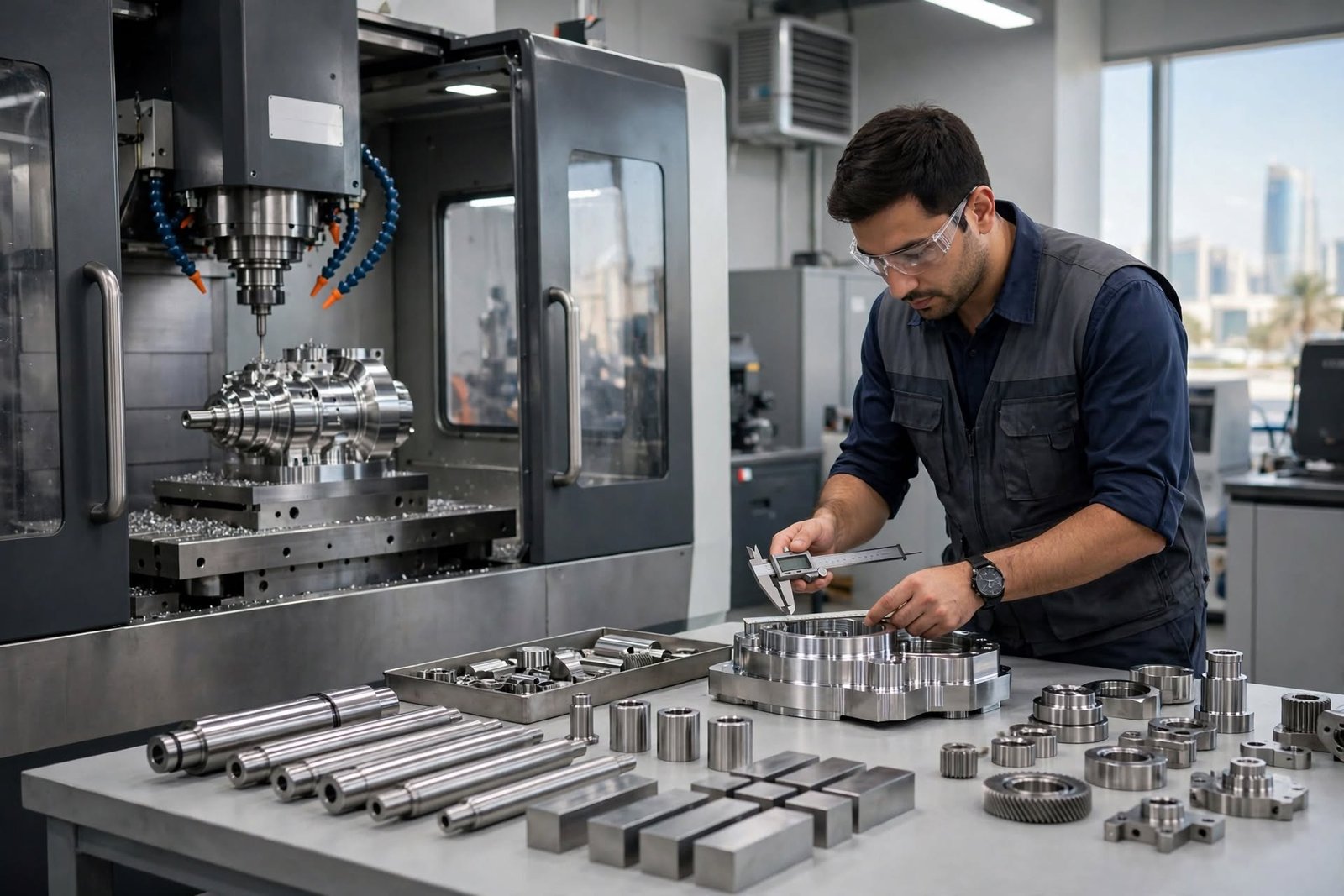
Genesis-MFG machines prototypes from a solid block of the same material as the final part, and that has practical consequences. CNC prototypes come in real metals and engineering plastics, match the strength of the production part and have smooth, production-quality surfaces. 3D printing mostly uses plastics and resins, usually gives lower strength with visible layer lines and often needs post-processing. The page’s rule of thumb is that 3D printing suits early concept and visual models, while CNC suits functional, load-bearing and test parts. Match the method to the question the prototype has to answer.
Six Prototype Services and When to Use Each
Genesis-MFG lists six services:
- Functional prototypes: working parts in the final material for performance and pressure testing
- Fit and assembly prototypes: to check how parts fit together before production
- Engineering validation (EVT) builds: small batches for testing and certification
- Reverse-engineered prototypes: improved versions of existing parts made from a sample
- Rapid tooling: jigs, fixtures and low-volume tooling to bridge the gap to production
- Bridge production: small runs while production tooling is being made
Pick by question. Does it work, does it fit, does it pass testing, or can it improve an existing part? Matching the service to that question keeps the first build useful.
Plan the Fit: Prototype Parts and Spacers Together
Fit problems often show up as small gaps between parts. For machined parts, the fit and assembly prototype tests how components go together before production. If your assembly also needs a thin spacer, Genesis-MFG’s shim page offers prototypes in low-volume and short-production quantities, so a custom shim manufacturer can supply spacers alongside the parts they sit between. Shims come in stainless steel, aluminum, copper, brass or titanium, from 0.001 in. to 0.250 in. (0.025 mm to 6.35 mm) thick, and are made by laser cutting and waterjet cutting.
Prototype materials include aluminium, stainless and carbon steel, brass, copper, titanium, and plastics such as POM, nylon, ABS, PEEK, PTFE, acrylic and polycarbonate. Aluminium (6061, 7075) is the most popular choice for fast, accurate metal prototypes. When you brief a rapid prototyping company UAE providers offer, list the parts and the spacers together so the test build reflects the real assembly.
From CAD Upload to Revision
The workflow has six steps:
- Upload a 3D CAD file (STEP or IGES) plus a drawing, or a sketch.
- Engineers review manufacturability and suggest changes that save time or cost.
- You receive a price and lead time.
- The prototype is CNC milled or turned in your chosen material.
- Critical dimensions are checked against your drawing.
- You test the part, send changes, and the next revision is machined.
There is no minimum order, so single prototypes are fine, and Genesis-MFG signs NDAs before you share designs. Once the design is approved, the same programs and process take it into production quantities. The shop is in Hamriyah Free Zone, Sharjah, serving Dubai, Abu Dhabi and the whole UAE. Choosing a rapid prototyping company UAE-wide that can also produce volume saves you from qualifying a second supplier later.
Conclusion
Match the method to the question, test fit and function early, and plan prototype parts and spacers together so the first build reflects the real assembly. If your assembly needs thin spacers, look for a custom shim manufacturer that can prototype in low volumes. Genesis-MFG’s shim page lists the materials, sizes and finishes, and a CAD file is enough to start a quote.
FAQs
1. Can I order just one prototype?
Yes. There is no minimum order, and Genesis-MFG makes single prototypes as well as small batches.
2. Do you sign an NDA?
Yes. Genesis-MFG signs non-disclosure agreements before you share your designs.
3. What files do I need for a prototype quote?
A 3D CAD file (STEP or IGES) and a 2D drawing with tolerances are best. Sketches or a physical sample also work.
4. Can a custom shim manufacturer supply prototype quantities?
Genesis-MFG offers shim prototypes in low-volume and short-production quantities.