
 Written by
Hair loss can develop gradually or appear as a receding hairline, thinning crown, or bald patches. Choosing an appropriate restoration method depends on the cause of hair loss, the availability of healthy donor follicles, and the results a person hopes to achieve. People researching Hair Transplant in Ajman can consult Dynamic Life Clinic to learn about available techniques, their differences, and the factors that influence treatment suitability. Understanding the main approaches to hair transplantation can help patients prepare for a consultation and make informed decisions about their hair restoration journey.
Understanding the Main Approaches to Hair Transplantation
Hair transplantation involves moving hair follicles from a donor area to a part of the scalp affected by hair loss. The donor area is commonly located at the back or sides of the head, where follicles may be more resistant to hereditary hair loss. The surgeon extracts the follicles and places them into carefully planned recipient sites to support natural-looking growth. The two main surgical techniques are Follicular Unit Extraction (FUE) and Follicular Unit Transplantation (FUT). Both methods use the patient’s existing hair follicles, but they differ in how those follicles are collected. Other approaches, such as direct implantation, describe variations in how grafts are placed rather than an entirely different source of hair. The most suitable option depends on the patient’s scalp, donor density, hair characteristics, and treatment goals.
Follicular Unit Extraction (FUE)
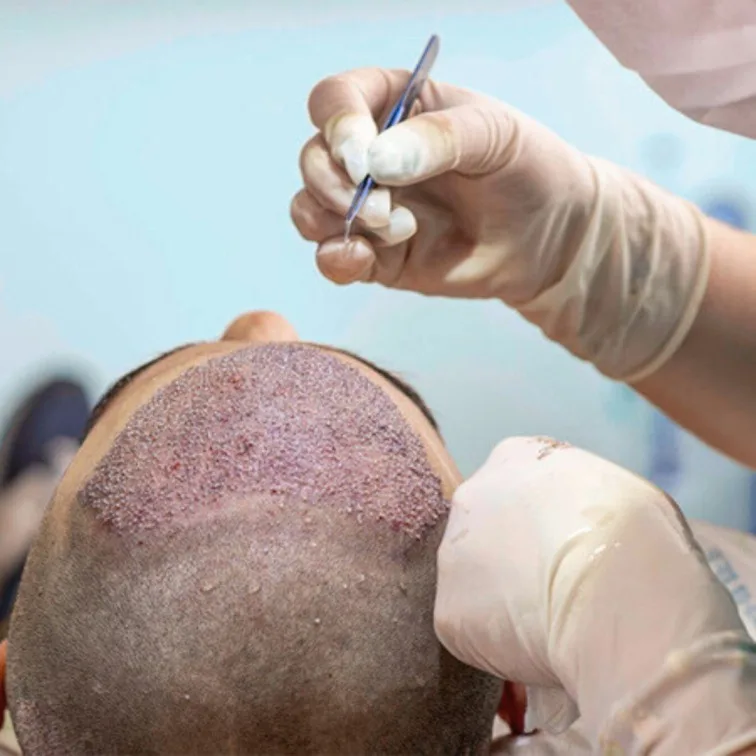
Follicular Unit Extraction, commonly called FUE, is a widely used hair transplantation technique in which individual follicular units are removed from the donor area using a small specialised instrument. Each graft is extracted separately, prepared for transplantation, and inserted into the recipient area. The surgeon plans the placement to match the natural direction, angle, and distribution of existing hair.
One potential advantage of FUE is that it generally leaves small, dot-like scars rather than one continuous linear scar. These scars may be less noticeable when the hair is worn short, although their visibility depends on the extraction method, healing, and the number of follicles removed. FUE can be suitable for people who prefer shorter hairstyles or want to avoid a linear donor scar. However, it still requires careful planning because excessive extraction can make the donor area appear thin.
Follicular Unit Transplantation (FUT)
Follicular Unit Transplantation, also known as FUT or the strip method, involves removing a narrow strip of scalp from the donor area. The strip is then divided into individual follicular units under magnification. These grafts are implanted into the areas affected by thinning or baldness.
FUT can be useful when a substantial number of grafts are needed and the patient’s scalp characteristics make the technique appropriate. It may leave a linear scar at the donor site, which is usually covered by surrounding hair but may be visible with very short hairstyles. Recovery of the donor area can differ from FUE, and the surgeon will explain the expected healing process. The choice between FUT and FUE should be based on individual assessment rather than the assumption that one technique is always superior.
Direct Hair Implantation (DHI)
Direct Hair Implantation (DHI) is a method associated with FUE harvesting. Individual follicles are extracted from the donor area and placed into the recipient area using a specialised implantation pen or similar instrument. The device allows the practitioner to control the placement angle, direction, and depth of each graft, depending on their technique and experience.
DHI is not a completely separate method of extracting donor hair because the follicles are commonly harvested using an FUE approach. Its main distinction is the way the grafts are implanted. It may be suitable for selected patients who need precise placement in areas such as the hairline or between existing hairs. However, the outcome depends on the patient’s scalp, graft quality, surgical planning, and the expertise of the medical team. DHI does not automatically guarantee faster healing, higher density, or better results than other techniques.
Sapphire FUE Hair Transplant
Sapphire FUE is a variation of FUE in which a blade made with sapphire is used to create recipient sites for the extracted grafts. The follicles are still harvested individually, while the instrument used to make the implantation openings differs from that used in conventional FUE procedures.
Some clinics offer this approach as an option for patients seeking hair restoration. However, the material of the blade alone does not determine the quality of the outcome. Graft handling, the surgeon’s skill, the placement pattern, and careful protection of the donor area remain important. Patients should ask what the technique involves in practice and whether it offers a meaningful advantage for their particular needs rather than choosing it based only on its name.
Body Hair Transplantation
Body Hair Transplantation involves taking follicles from areas other than the scalp, such as the beard or chest, and transplanting them to a scalp area. It may be considered when scalp donor hair is limited or when additional coverage is required in carefully selected cases. Beard hair can have different thickness and growth characteristics from scalp hair, while chest hair may have a different growth cycle and texture.
Because of these differences, body hair may not blend perfectly with existing scalp hair. The suitability of this approach depends on the donor area’s characteristics, the condition being treated, and the patient’s expectations. It requires specialised assessment and should not be considered a routine substitute for scalp donor hair. The surgeon should explain the limitations, possible scarring, and realistic contribution body hair could make to the overall result.
Hair Transplantation for Women
Hair transplantation can be an option for some women, but suitability depends on the cause and distribution of hair loss. Women with a localised receding hairline, traction-related hair loss, or certain areas of permanent scarring may be candidates if they have an appropriate donor area.
Women experiencing widespread thinning across the scalp may not have a sufficiently stable donor region. Hormonal changes, nutritional deficiencies, thyroid disorders, and other conditions can also contribute to hair loss, so identifying the cause is important before surgery. A dermatologist or qualified hair restoration surgeon can assess whether transplantation is suitable or whether medical management would be more appropriate. The treatment plan should be individualised rather than based on gender alone.
Comparing the Different Hair Transplant Techniques
Each technique has specific characteristics, and the best choice depends on the patient’s needs. The following comparison provides a general overview.
These methods are not all separate alternatives at the same stage of surgery. FUE and FUT primarily describe how donor follicles are collected, while DHI and Sapphire FUE refer to implantation approaches or instruments. Body hair transplantation describes the source of the donor follicles. A qualified surgeon can explain which combinations are appropriate for an individual patient.
How to Choose the Right Hair Restoration Method
Selecting a hair transplant technique involves more than comparing procedure names. The surgeon should assess the pattern of hair loss, donor density, hair thickness, scalp health, age, medical history, and long-term goals. The number of grafts required and the amount of donor hair available also influence the decision.
Patients should ask about the surgeon’s qualifications, experience with the recommended method, expected scarring, recovery, potential complications, and realistic outcomes. It is also important to understand whether future hair loss could affect the appearance of the transplanted area. No technique can guarantee a particular density or completely prevent further natural hair thinning. A personalised plan helps balance the desired coverage with the need to preserve donor hair for the future.
Recovery and Results After Hair Transplant Surgery
Recovery depends on the technique used, the size of the procedure, and individual healing. Mild swelling, redness, tenderness, itching, and scabbing may occur during the early recovery period. Patients should follow the medical team’s instructions for washing the scalp, sleeping, exercising, and protecting the grafts. Picking at scabs or rubbing the treated area can interfere with healing.
The transplanted hair shafts often shed during the first few weeks, which is a common part of the process. New growth may begin after several months, with more noticeable changes developing gradually. Results are often assessed around 9–12 months, although some patients need longer. Final density varies according to donor hair quality, graft survival, hair characteristics, and the extent of hair loss. Follow-up appointments allow the clinician to monitor healing and discuss any concerns.
Conclusion
The main hair transplant approaches include FUE, FUT, DHI, Sapphire FUE, and selected forms of body hair transplantation. FUE and FUT differ primarily in how donor follicles are collected, while DHI and Sapphire FUE describe aspects of the implantation process. Body hair transplantation may be considered in specific circumstances when scalp donor hair is limited. No single method is best for everyone. A professional assessment of donor hair, scalp health, hair-loss pattern, and personal goals is essential for choosing a suitable technique and understanding the possible results.
Frequently Asked Questions
1. What are the two main types of hair transplant surgery?
The two main techniques for harvesting scalp donor hair are FUE and FUT. FUE extracts individual follicular units, while FUT removes a narrow strip of scalp that is divided into grafts. Both techniques can produce natural-looking results when appropriately planned and performed.
2. Is FUE better than FUT?
Neither method is universally better. FUE usually produces small dot-like scars, whereas FUT leaves a linear scar. The right choice depends on donor hair density, the number of grafts required, hairstyle preferences, scalp characteristics, and the surgeon’s assessment.
3. What is the difference between DHI and FUE?
FUE describes how individual follicles are extracted from the donor area. DHI generally describes an implantation approach in which extracted follicles are placed using a specialised device. DHI often uses FUE for harvesting, so the two terms do not necessarily refer to competing procedures.
4. What is Sapphire FUE?
Sapphire FUE is a variation of FUE that uses a sapphire blade to create recipient sites for the extracted follicles. The quality of the result still depends on appropriate patient selection, graft handling, surgical skill, and careful implantation.
5. Can body hair be used for a scalp transplant?
Yes, in selected cases, follicles from areas such as the beard or chest may be transplanted to the scalp. Body hair differs from scalp hair in thickness, texture, and growth patterns, so the surgeon must determine whether it can provide a useful contribution.
6. Which hair transplant method leaves the least visible scarring?
FUE generally leaves small dot-like scars rather than the linear scar associated with FUT. However, FUE still causes permanent scarring, and the visibility depends on the technique, healing, donor management, and hairstyle. No surgical method is completely scar-free.
7. How long does it take to see hair transplant results?
Transplanted hair shafts commonly shed during the first few weeks. New growth may start after several months, and visible improvement often develops gradually over six to nine months. Results are commonly assessed around 9–12 months, although timing varies.
8. Is hair transplantation suitable for women?
Some women may be suitable, particularly those with localised hair loss and a healthy donor area. Women with widespread thinning or certain underlying conditions may need further investigation before surgery. A qualified professional can assess the cause and recommend an appropriate approach.
9. Can a hair transplant guarantee full hair density?
No. Results depend on the available donor follicles, the size of the thinning area, hair characteristics, graft survival, and individual healing. A transplant redistributes existing hair rather than creating new follicles, so full original density cannot be guaranteed.
10. How can I decide which hair transplant technique is right for me?
Arrange a consultation with a qualified hair restoration surgeon. They can examine your scalp, assess donor hair, review your medical history, and discuss your goals. Ask about the advantages and limitations of each recommended method, possible risks, recovery, and long-term planning.