
 Written by
Few facial changes alter how others read your mood quite as dramatically as a descending brow. When forehead tissues gradually lose elasticity and gravity pulls the eyebrow arch downward, people often look tired, stressed, or stern even when they feel completely rested and cheerful. Patients researching facial rejuvenation options frequently discover that scheduling a Forehead Lift in Islamabad depends far less on a specific birthday and far more on individual facial anatomy, skin resilience, and the depth of upper-face aging.Rather than waiting for a predetermined milestone on the calendar, board-certified facial plastic surgeons evaluate structural signs around the temples, glabella (the area between the eyebrows), and upper eyelids. Some individuals inherit heavy, low-set brows in their late thirties, while others maintain naturally lifted upper-face proportions well into their late fifties before considering surgical correction.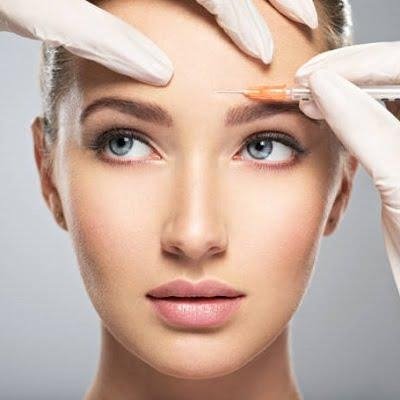
Why Chronological Age Matters Less Than Anatomical Signs?
Two people born in the exact same year can display completely different upper-face aging patterns. Genetics, sun exposure, habitual facial expressions, and skin thickness all dictate when the brow begins to descend below the orbital rim.In women, the aesthetic ideal generally places the eyebrow arch slightly above the bony orbital rim, peaking gently toward the outer third. In men, the brow naturally sits straighter and closer to the orbital ridge. When tissue laxity drops the brow below these natural landmarks, excess upper-eyelid skin bunches together—a phenomenon known as pseudoptosis. Treating the eyelids alone when the root cause is a heavy forehead often produces an incomplete result, whereas lifting the brow restores open, balanced eye proportions naturally.
Brow Lift Considerations Across Different Decades
Understanding how the upper face evolves over time helps clarify what typically motivates patients in each age bracket—and which surgical or non-surgical approaches suit each stage best.
Late 30s to Early 40s: Early Prevention and Structural Correction
Patients in their late thirties or early forties rarely experience severe skin sagging, yet many seek help for genetically low-set eyebrows or deep vertical frown lines between the brows caused by hyperactive corrugator muscles. At this stage, minimally invasive endoscopic techniques using tiny incisions hidden behind the hairline can subtly elevate the outer brow tail and soften dynamic creases without altering natural facial identity.
Mid-40s to Late 50s: The Most Common Window for Surgery
Statistically, the forty-five to sixty age range represents the most popular window for forehead rejuvenation. During these years, collagen and elastin depletion become noticeable across the forehead, horizontal expression lines remain visible even at rest, and lateral brow hooding begins crowding the outer corners of the eyes. Skin elasticity remains strong enough to drape smoothly over newly repositioned underlying tissues, delivering long-lasting, natural-looking refreshment.
60s and Beyond: Comprehensive Upper-Face Rejuvenation
Healthy adults in their sixties and seventies routinely achieve remarkable outcomes from brow lifting, provided they pass routine medical clearance. Because skin laxity and forehead crease depth are typically more pronounced in this decade, surgeons often recommend a temporal or pretrichial approach (placed right along the frontal hairline) and frequently pair the lift with upper blepharoplasty to remove redundant eyelid skin cleanly.
| Age Group | Common Upper-Face Concerns | Preferred Approach | Typical Recovery Window |
| Late 30s – Early 40s | Genetically low brow, early glabellar frown lines | Endoscopic brow lift or targeted neuromodulators | 5 to 7 days |
| Mid-40s – Late 50s | Lateral brow hooding, persistent horizontal creases | Endoscopic or temporal brow lift | 7 to 10 days |
| 60s and Older | Significant forehead laxity, heavy upper-eyelid crowding | Pretrichial or coronal lift, often with blepharoplasty | 10 to 14 days |
Key Signs You May Be Ready for a Forehead Lift
If you are unsure whether non-surgical injectables are still sufficient or whether surgical repositioning makes better long-term sense, look for these practical indicators:
The Mirror Lift Test: Stand in front of a mirror and gently place your fingertips just above your eyebrows, lifting the skin upward by a few millimeters. If doing so immediately makes your eyes look brighter, softer, and less crowded—and reduces upper-lid heaviness—a brow lift directly addresses your concern.
Persistent Resting Creases: Botulinum toxin relaxes muscle movement temporarily, but once horizontal forehead furrows remain etched into the skin even when your face is completely relaxed, surgical elevation provides far more durable smoothing.
Compensatory Forehead Strain: Many people subconsciously raise their frontalis muscle all day long just to keep heavy brows from obstructing their peripheral vision, leading to tension headaches by late afternoon.
Dimishing Returns from Injectables: When repeated neuromodulator treatments begin feeling heavy rather than lifting the brow, anatomical tissue descent has usually progressed beyond what temporary muscle relaxation can fix.
Modern Surgical Techniques and What Recovery Involves
Contemporary brow rejuvenation avoids the overly pulled, permanently surprised look associated with outdated techniques. Surgeons customize incision placement to match your hairline height and bone structure:
Endoscopic Forehead Lift: Uses three to five tiny incisions concealed within the scalp alongside a miniature camera to release tight brow ligaments and secure the tissue in a higher position.
Temporal (Lateral) Brow Lift: Focuses specifically on lifting the outer third of the eyebrows through short incisions tucked inside the temple hairline, ideal for correcting outer-eye hooding.
Pretrichial Brow Lift: Places an ultra-fine incision right along the natural frontal hairline, allowing the surgeon to lift heavy forehead skin while simultaneously lowering or preserving a high hairline.
Most procedures take one to two hours on an outpatient basis. Mild swelling and bruising around the forehead and upper eyes peak within the first seventy-two hours and subside steadily over seven to ten days. Keeping the head elevated while sleeping and avoiding strenuous lifting for two to three weeks ensures smooth, predictable healing.
Contact Information
If you would like a personalized assessment of your brow position, hairline anatomy, and upper-eyelid balance, you can connect with our clinical team using the details below:
Address : Office Number LG 20 – 21 Interlace Plaza I-8 Markaz Islamabad
Phone : +92 333 5705871
Email : info@glamorousclinic.com.pk
Link : https://www.glamorousclinic.com.pk/
Final Thoughts
There is no universal age that signals the exact right moment for a brow lift; instead, the ideal time arrives when drooping forehead tissues no longer reflect your energy, mood, or vitality. Whether you are noticing early brow heaviness in your early forties or seeking comprehensive upper-face renewal in your fifties or sixties, choosing an experienced facial plastic surgeon ensures subtle, harmonious elevation that keeps you looking refreshed and unmistakably like yourself.