
 Written by
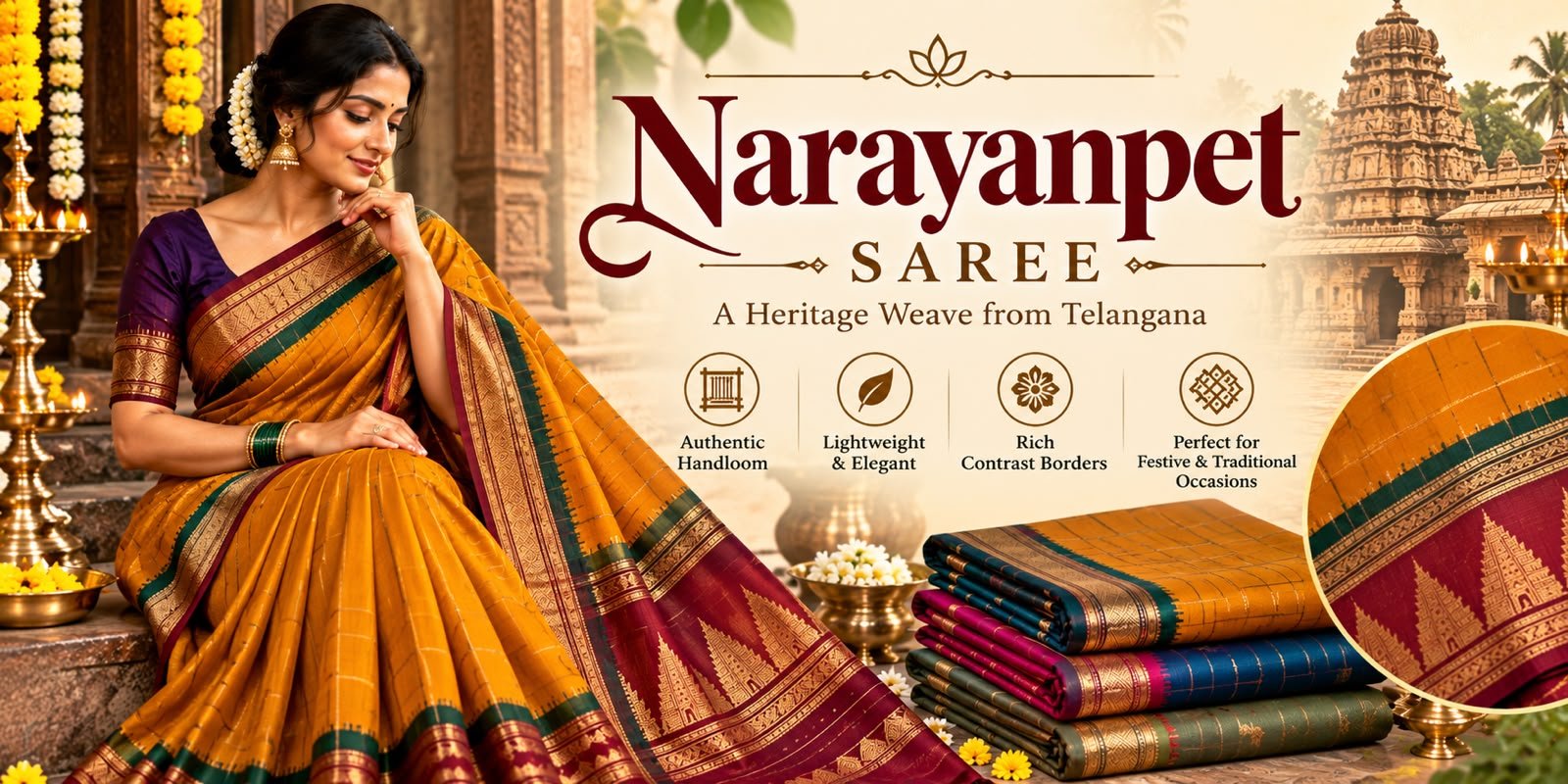
Traditional Indian clothing often carries stories of regional identity, craftsmanship, and cultural continuity. Among these textiles, the Narayanpet cotton saree holds a distinctive place for women who appreciate classic designs and traditional weaving. Its recognisable borders, balanced patterns, and connection to Narayanpet in Telangana make it an appealing choice for those who want to incorporate cultural heritage into their wardrobe.
The appeal of narayanpet saree heritage goes beyond appearance. It reflects the importance of regional textile traditions and the continued appreciation of handloom-inspired clothing. Whether you are shopping for festive wear, a family occasion, or a thoughtful gift, understanding the saree’s background can help you make a more informed purchase.
This guide explores the weaving tradition, design characteristics, cultural significance, and buying considerations that make Narayanpet cotton sarees a heritage-inspired choice.
What Is the Heritage Behind a Narayanpet Cotton Saree?
Narayanpet sarees are associated with Narayanpet, a town in Telangana known for its traditional textile production. The sarees are recognised for their distinctive borders, geometric patterns, and structured appearance. Cotton varieties appeal to women who prefer traditional clothing with a practical, versatile character.
The region’s textile identity has developed through generations of weaving knowledge and local craftsmanship. Traditional sarees are not simply garments; they can also represent the skills, design preferences, and cultural practices connected with the places where they are produced.
A Connection to Regional Craftsmanship
Regional textiles often develop distinctive visual features that help people recognise their origins. Narayanpet sarees are commonly associated with contrasting borders, stripes, and traditional motifs.
These details give the saree its characteristic appearance while allowing variations in colour, pattern, and fabric. Individual products may differ depending on the weaving technique, materials, and design choices used.
For buyers, this regional connection adds meaning to the garment. A Narayanpet cotton saree can be a way to appreciate traditional Indian textiles while choosing clothing that remains suitable for modern wardrobes.
Why Heritage Matters in Clothing
Heritage-inspired clothing connects contemporary fashion with earlier generations of craftsmanship. Wearing a traditional saree can help maintain an interest in regional designs, especially when consumers learn about the textile rather than purchasing it solely for its appearance.
However, a traditional design alone does not automatically confirm that a saree is handwoven or produced in its place of origin. Buyers should check the product description, manufacturing details, and seller information before making assumptions about authenticity.
Understanding the Weaving Tradition of Narayanpet Sarees
The weaving tradition associated with Narayanpet sarees is an important part of their appeal. Traditional textile production requires knowledge of yarn, weaving structures, colour combinations, and pattern placement.
Distinctive Borders and Patterns
One of the most recognisable features of many Narayanpet sarees is the contrast between the body and the border. Stripes, geometric motifs, and traditional pattern arrangements can give the fabric a clear visual structure.
The border often provides a strong frame for the saree, while the pallu adds another area of design interest. These details make the saree suitable for women who appreciate traditional styling without necessarily wanting heavy embroidery or elaborate embellishments.
Designs vary between products, so examine the actual photographs and specifications when shopping online.
Cotton Fabric and Everyday Practicality
Cotton Narayanpet sarees appeal to buyers who prefer natural-fibre clothing and a classic drape. Depending on the yarn, weave, and finishing, the fabric may feel light or more structured.
Cotton can be a practical choice for family gatherings, cultural programmes, daytime functions, and some festive occasions. However, comfort depends on the weather, fabric weight, draping style, and individual preferences.
Before purchasing, review the care instructions and ask the seller about fabric composition if the information is unclear.
The Importance of Craftsmanship
Traditional weaving involves attention to detail, including the consistency of the weave, the placement of borders, and the overall finish. These features can influence both the appearance and durability of a saree.
If you want to support traditional textile production, look for sellers who clearly explain the saree’s origin, materials, weaving method, and artisan or producer information. Transparent descriptions help buyers understand what they are paying for.
How Narayanpet Sarees Represent Cultural Clothing
Cultural clothing can express regional identity, family traditions, and personal connections to heritage. Sarees are worn across India in many different ways, with styling preferences influenced by local customs, family practices, and individual taste.
Narayanpet cotton sarees can be incorporated into these traditions without requiring a special occasion.
Suitable for Festivals and Family Gatherings
A Narayanpet saree can be styled for festivals, family celebrations, religious gatherings, and cultural events. Its traditional borders and patterns create a recognisable ethnic look that can be complemented with simple jewellery or more elaborate accessories.
For a daytime event, a plain blouse and minimal jewellery may be enough. For a festive occasion, a contrasting blouse, bangles, and traditional earrings can create a more celebratory appearance.
The choice depends on the saree’s colour, pattern, and the formality of the event.
A Meaningful Option for Gifting
Traditional sarees can make thoughtful gifts for birthdays, anniversaries, festivals, and family milestones. A Narayanpet cotton saree may be particularly suitable for someone who enjoys regional textiles or prefers classic ethnic wear.
When choosing a saree as a gift, consider the recipient’s preferred colours, comfort, and usual clothing style. A versatile design may be more useful than a highly specific pattern that can only be worn occasionally.
Include accurate information about the fabric and care requirements so the recipient knows how to maintain it.
Connecting Generations Through Traditional Clothing
Sarees are often passed between generations or worn for occasions that bring families together. A heritage-inspired saree can become part of these personal traditions, especially when its origin and design are shared with younger family members.
The meaning of the garment does not depend on wearing it in a particular way. It can be appreciated through everyday use, special occasions, or simply learning about the textile traditions it represents.
What Makes a Narayanpet Saree Different From Other Traditional Sarees?
Indian handloom and traditional sarees vary widely by region. Differences may include the weaving structure, fabric, motifs, border arrangement, and finishing.
Narayanpet sarees are often recognised by their structured borders and geometric design elements. Other regional sarees may feature different patterns, textures, or decorative techniques.
When comparing sarees, focus on the actual characteristics rather than assuming that one textile is automatically better than another.
Consider these factors:
- Fabric: Check whether the saree is pure cotton, a cotton blend, or another material.
- Border design: Examine the width, contrast, and pattern of the border.
- Pallu: Look at its design, texture, and finishing.
- Weaving method: Confirm whether the product is handwoven or machine-made.
- Care requirements: Check washing, drying, ironing, and storage instructions.
- Intended use: Consider whether you need a saree for regular wear, gifting, or special occasions.
These comparisons help you select a saree based on your needs while appreciating the individuality of different Indian textile traditions.
How to Choose an Authentic Narayanpet Cotton Saree
If heritage and craftsmanship are important to you, careful shopping is essential. Product names and traditional-looking designs alone may not provide enough information about a saree’s origin.
Check the Seller’s Product Details
Look for clear descriptions of the fabric composition, weaving technique, origin, dimensions, and care instructions. Sellers who provide close-up photographs of the border, body, and pallu make it easier to assess the product.
If a listing claims that the saree is handwoven or comes directly from a particular weaving region, check whether the seller provides supporting details.
Ask About Materials and Production
If the product information is incomplete, ask whether the saree is pure cotton or blended, how it is made, and where it is produced. These questions are especially useful when the price is higher because of claimed craftsmanship or regional origin.
Avoid relying on price alone as proof of authenticity. A higher price does not automatically guarantee handloom production, and a lower price does not by itself establish poor quality.
Consider Long-Term Value
A saree’s value depends on more than its purchase price. Fabric quality, comfort, versatility, maintenance, and how often you expect to wear it should all influence your decision.
A design that works with several blouses and accessories may offer more practical value than one purchased for a single event. Following suitable care instructions can also help maintain its appearance over time.
How to Care for Your Narayanpet Cotton Saree
Proper maintenance helps protect the fabric and preserve its appearance.
- Follow the seller’s washing and ironing instructions.
- Test unfamiliar cleaning methods carefully or seek professional advice when needed.
- Keep the saree away from prolonged direct sunlight if its colours may fade.
- Store it in a clean, dry place after ensuring it is completely dry.
- Refold it periodically to avoid keeping the same creases for extended periods.
- Keep sharp jewellery and accessories away from the fabric to prevent snags.
Care requirements may vary according to dyes, yarn, finishing, and decorative details. Always follow product-specific guidance rather than assuming every cotton saree can be treated identically.
Conclusion
A Narayanpet cotton saree is a heritage-inspired choice because it connects regional textile identity with traditional design and contemporary clothing needs. Its distinctive borders, geometric patterns, and association with Narayanpet in Telangana make it appealing to women who value cultural clothing and classic styling.
Understanding the narayanpet saree heritage also means looking beyond appearance. Learning about the weaving tradition, checking the saree’s origin, and choosing a transparent seller can help you appreciate the craftsmanship more meaningfully.
Whether you buy one for a festival, a family gathering, or everyday ethnic wear, consider the fabric, design, authenticity, and care requirements. A thoughtfully chosen saree can become a lasting part of your wardrobe while keeping your interest in India’s textile heritage alive.