Written by
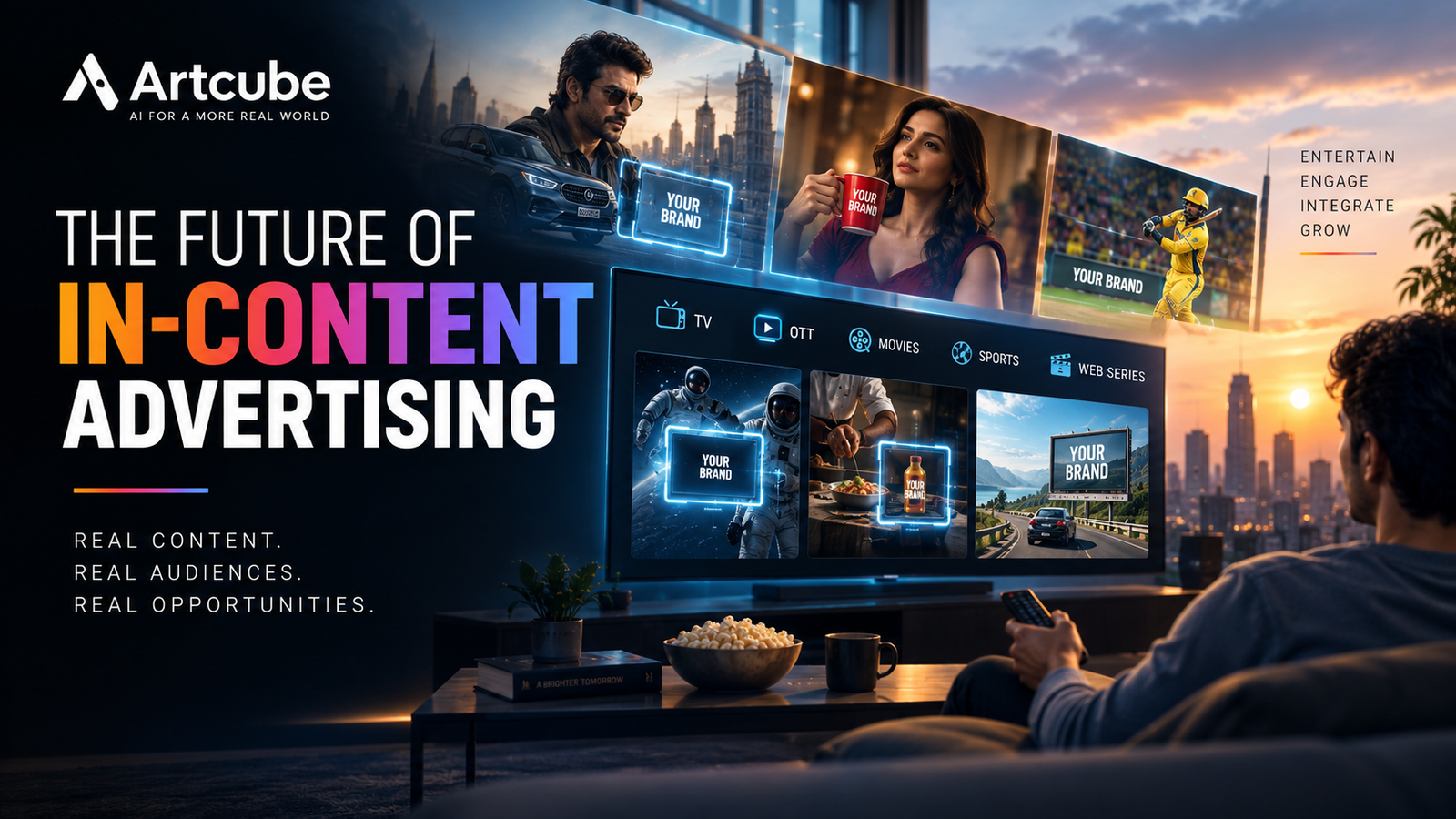
 Advertising is moving beyond traditional banners, commercial breaks, and standalone promotional messages. The future of in-content advertising is increasingly focused on placing brands within relevant entertainment and digital content, creating advertising experiences that connect with audiences without completely separating the message from the content they are consuming.
With AI, streaming, connected TV, and digital video continuing to develop, in-content advertising is becoming a more technology-driven part of the advertising ecosystem.
What Is the Future of In-Content Advertising?
The future of in-content advertising involves combining contextual relevance, artificial intelligence, virtual product placement, branded entertainment, and measurable outcomes.
Instead of treating advertising as a separate interruption, brands can integrate products and messages into movies, TV shows, streaming videos, articles, creator content, and other media environments.
The objective is not simply greater visibility. It is to make the placement relevant to the content, audience, and campaign objective.
AI Is Changing Advertising Context
One of the biggest developments is the use of multimodal AI. Modern AI systems can analyze video, audio, speech, imagery, and metadata together to understand the context of digital content. IAB says these capabilities can help advertisers improve contextual understanding and help publishers unlock additional monetization opportunities across premium video environments.
This creates opportunities for more sophisticated contextual advertising, where brands can identify suitable content environments instead of relying only on broad audience categories.
Virtual Product Placement Will Expand
Virtual product placement is another important trend. Products, logos, signs, and other brand elements can be digitally integrated into existing video content without necessarily requiring the original scene to be reshot.
As computer vision, generative AI, and video processing improve, these integrations can become more flexible and scalable.
This could allow the same content asset to support different brand campaigns or placements across markets and time periods, subject to content rights and production requirements.
Platforms such as Artcube are part of this emerging advertising technology landscape, focusing on AI-powered visual content and brand integration.
Streaming and CTV Create More Opportunities
The shift from linear television toward streaming and connected TV is expanding the digital video advertising ecosystem. IAB projects U.S. digital video advertising will surpass $80 billion in 2026, growing 11% year over year.
The September 2026 IAB update also raised its forecast for overall U.S. advertising spend growth to 12.3% for 2026, while CTV is projected to grow 15.6% year over year.
These developments create more opportunities for advertisers to experiment with content-led formats across streaming, CTV, and digital video.
From Impressions to Measurable Outcomes
Another major change is how advertising success is measured. The 2026 IAB NewFronts highlighted a shift from impressions toward measurable business outcomes, with AI increasingly influencing measurement and accountability.
For in-content advertising, this means brands will increasingly need to evaluate more than visibility. Campaign measurement may include reach, engagement, brand lift, audience relevance, conversions, and other business outcomes depending on the campaign.
Transparency Will Become More Important
As AI becomes more involved in advertising creation, targeting, and execution, transparency will become increasingly important. In August 2026, IAB released an updated framework for AI transparency and disclosure in advertising, emphasizing clearer guidance around when AI involvement should be disclosed.
For in-content advertising, maintaining clear commercial communication and appropriate disclosure will be important as technology makes integrations increasingly sophisticated.
What Brands Should Prepare For
Brands looking toward the future should focus on five areas:
- Context: Match advertising with relevant content environments.
- Creative quality: Make integrations feel natural and visually consistent.
- AI readiness: Use AI for content analysis, creative workflows, and optimization.
- Measurement: Connect placements with meaningful campaign outcomes.
- Transparency: Maintain clear and responsible advertising practices.
Businesses interested in the technology supporting modern advertising workflows can explore Artcube’s technology and its approach to AI-powered content and brand integration.
Conclusion
The future of in-content advertising is moving toward a combination of AI, contextual relevance, streaming, virtual product placement, and measurable advertising outcomes. Instead of simply placing advertisements around content, brands can increasingly become part of the content experience itself.
The next phase will depend on how effectively advertisers combine technology, creativity, relevance, measurement, and transparency. As digital video and AI continue to evolve, in-content advertising has the potential to become a more flexible and sophisticated part of modern brand communication.